
Inquire Now
A Kruger National Park safari puts the Big Five within reach on self drive game viewing, guided drives and bush walks, with rest camps and lodges for every budget. Ask us to plan your Kruger tours.
A Kruger National Park safari is a Big Five game viewing trip in South Africa's largest national park, done either as a self drive between public rest camps or on guided game drives, walks and Kruger National Park tours run by SANParks, private lodges and operators. International visitors pay a daily conservation fee of R692 per adult on the current SANParks tariff. Most first trips spend three to five nights in the busier southern and central sections.
 3 Days
 4 Days
 5 Days
Prefer your own dates and lodges? Ask for a tailor-made quote.

A 3-day safari in Kruger National Park, South Africa, with game drives in search of the Big Five, a ranger-led bush walk and a picnic…
Safari Details
A 4-day South Africa safari with full-day game drives in Kruger National Park, a day on the Panorama Route (Blyde River Canyon, God's Window, Bourke's…
Safari Details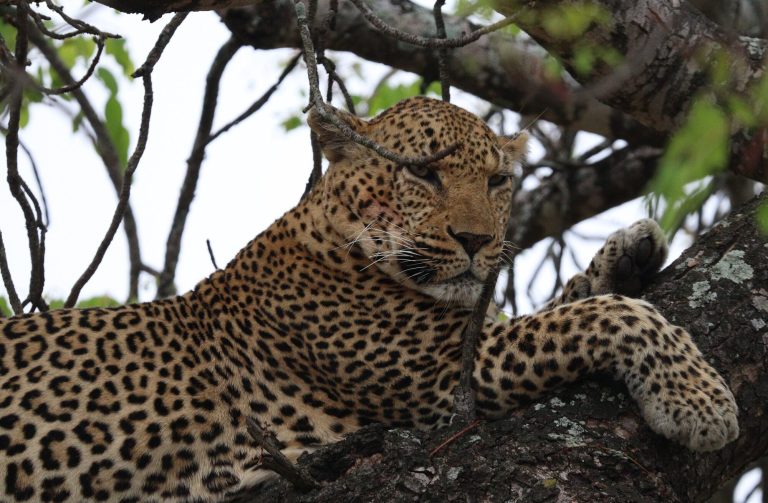
A 5-day Big Five safari in South Africa: three nights in the Sabi Sand private reserve with open-vehicle drives and a ranger-and-tracker team, then a…
Safari Details
A 7-day South Africa safari from Johannesburg, with game drives in Kruger National Park and a private reserve, the Panorama Route, Hluhluwe-Imfolozi Park, and a…
Safari Details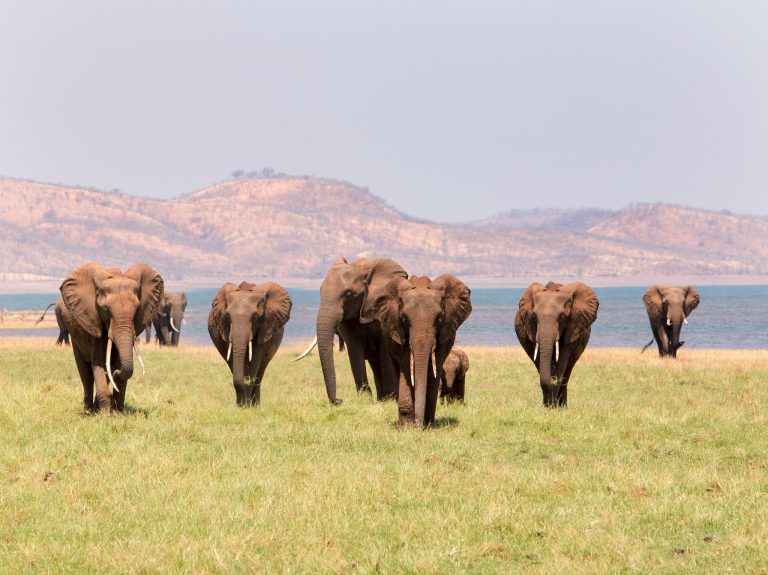
A 9-day South Africa safari from Johannesburg with game drives in Kruger National Park and Hluhluwe Imfolozi Park, followed by Cape Town and a Cape…
Safari DetailsA Kruger National Park safari suits first-time travellers because the park combines all of the Big Five with tarred roads, fenced rest camps and fees low enough to stay for several days. You can drive yourself on the park's tar and gravel roads, sleep in a SANParks cottage for a fraction of a private lodge rate, then add a guided drive or a dawn walk with armed rangers when you want a professional pair of eyes.
That flexibility is the main reason to choose Kruger over a park where a lodge runs every game drive. Families can build a trip around children's routines, and photographers can wait at one waterhole all morning. Couples can spend two nights in a public rest camp and two in a private concession without changing parks.
The trade off is traffic. Kruger is one of Africa's busiest parks, and a lion sighting near Skukuza or Lower Sabie can draw a line of cars within minutes. Travellers who want open vehicles, off-road tracking and very few other people around a sighting usually spend at least part of the trip in a private reserve or concession lodge.
Is it worth it? For a first safari, a self drive family or anyone combining a safari with Cape Town, yes: a five day Kruger trip costs a fraction of a fly-in safari elsewhere and the game viewing in the south is consistent. Travellers who have already done the Masai Mara or Serengeti and want solitude should budget for a private reserve rather than the public roads alone.
Kruger safari tours fall into five main styles: self-drive game viewing, SANParks guided game drives, guided bush walks, multi-night wilderness trails and lodge-based safaris in private concessions. Most visitors mix two or three, for example driving themselves by day and booking a SANParks night drive, because private cars must be inside a camp before the gates close.
A self-drive safari in Kruger means hiring a car, buying daily conservation fees and driving the park's public roads between rest camps. Tourist roads are tar or graded gravel, and SANParks sets the speed limit at 50 km/h on tar, 40 km/h on gravel and 20 km/h inside camps, with an average of 30 km/h recommended for safety and game viewing.
An ordinary hire car copes with the tourist roads. Forum posters still advise a model with more ground clearance, because a low saloon sits below the other cars at a busy sighting and sees less. Read the rental terms before you sign. Several travellers in Kruger planning threads found that the policy excluded or capped cover for tyre and undercarriage damage on gravel.
The rules are short and strictly enforced: stay in your vehicle except at fenced camps and designated points, never feed animals, and be inside a camp or out of the park by gate closing time. SANParks does not admit latecomers at the entrance gates, and repeat offenders at rest camps are fined.
SANParks guided game drives run from most main rest camps and some entrance gates in open vehicles with a park guide. Morning drives leave half an hour before the gates open to private cars and last three to three and a half hours. Sunset drives go out before dusk for about three hours and finish with a spotlight. Night drives leave at 19:30 or 20:00, depending on the season, and last about two hours.
A night drive is the only way most self drivers see Kruger after dark, when hyenas, owls and hunting lions are active. SANParks prices adults and children separately and does not take children under 6 on guided drives. Some travellers report that drives at smaller camps or gates do not show online availability, and camp reception takes the booking on arrival.
Morning bush walks in Kruger take up to eight guests outside a camp fence with two armed field guides, leaving at dawn and returning before the midday heat; many camps run afternoon walks too. Walking changes the scale of the bush: tracks and termite mounds come into focus, and the guides decide how close to go to any large animals. SANParks does not allow children under 12, asks for comfortable closed shoes and natural colours, and books walks through the camp. Our guide to walking safaris in Africa covers what to expect on foot, and safari footwear covers what to wear.
Kruger's wilderness trails are three-night walking safaris from a rustic base camp in a zoned wilderness area, with two full days on foot. SANParks caps each group at eight people aged 12 to 65. Trails start on a Wednesday afternoon and end on Saturday morning, or run Sunday to Wednesday, departing from the reception of a rest camp such as Berg-en-Dal (Bushman and Wolhuter trails), Pretoriuskop (Napi), Satara (Sweni and Mathikithi), Letaba (Olifants) or Punda Maria (Nyalaland). Each camp has four huts sleeping two, so a solo booking may share with another trailist. SANParks zones about 49% of Kruger as wilderness, and these trails are the main way into it.
Birdwatching safaris in Kruger cover more than 500 recorded species, and the summer months from October to March add migrant birds to the residents. Rest camp gardens, river camps on the Sabie, Letaba and Olifants, and the far north around Punda Maria and Pafuri are the areas birders name most often. The Sable Dam hide and the overnight hides at Sable and Shipandani let you sit at water without a vehicle.
The quickest way to pick a style is to match it to your trip:
Most travellers who plan with us end up combining the first and last of these, a few nights in SANParks camps and a few in a lodge.
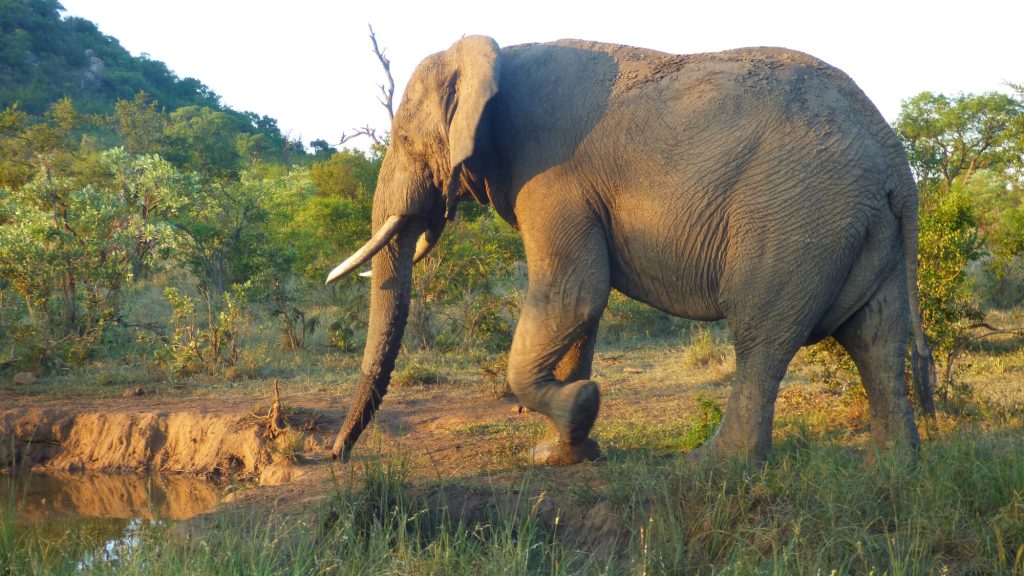
Kruger is home to all of the Big Five plus about 147 mammal species, 507 bird species, 114 reptiles, 34 amphibians and 49 fish, according to SANParks, along with 336 tree species. Sightings are never guaranteed, but elephant, buffalo, giraffe, zebra, impala and hippo turn up on most days in the south and centre.
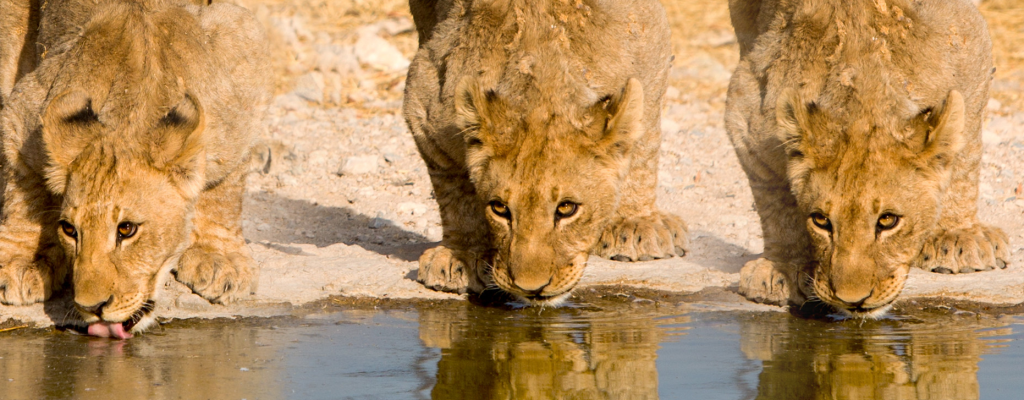
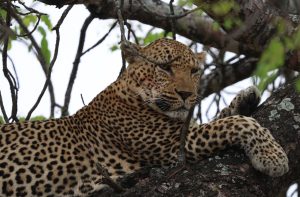
A Big Five safari in Kruger looks for lion, leopard, elephant, buffalo and rhino, and the southern half of the park gives the best odds of seeing several in one trip. Elephant and buffalo are widespread. Lions are most often reported on the grassland plains around Satara and along the roads between Skukuza and Lower Sabie. Leopards favour riverine trees and show mostly early and late. Patience beats distance driven.
Rhino are present but scarce and heavily protected, so treat a sighting as a bonus. For how Kruger compares with other Big Five parks, see our guide on where to see the Big Five in Africa.
African wild dogs, an endangered species, live in Kruger and the private reserves around it, but they range over huge areas and turn up unpredictably. Cheetahs favour the open plains of the central section. Spotted hyenas and jackals are common, and the smaller cats are mostly nocturnal, so a night drive gives the best chance of seeing them.
Kruger's 507 bird species range from raptors and vultures to kingfishers along the rivers. Crocodiles and hippos are easy to find on the Sabie, Crocodile, Letaba and Olifants rivers. The northern woodland looks very different from the southern bush, which is one reason repeat visitors move north.
Kruger National Park lies in the north-east of South Africa, spread across Limpopo and Mpumalanga provinces and running north from the Crocodile River to the Limpopo River. It shares a combined 374 km border with Mozambique and Zimbabwe, and forms part of the Great Limpopo Transfrontier Park with Mozambique's Limpopo National Park and Zimbabwe's Gonarezhou National Park.
Visitors usually think of Kruger in three sections. The south, between the Crocodile and Sabie rivers, has the most camps and gates, and the most traffic. The centre around Satara and Olifants is flatter grassland and basalt plains. The north, from Mopani to Punda Maria and Pafuri, is quieter, further from Johannesburg and better for birders than for a first Big Five trip. Nine entrance gates connect the park to the surrounding towns, and two international border posts link it to Mozambique.
The best time to visit Kruger National Park for game viewing is the dry winter from April to September, when bush thins out and animals gather at rivers and waterholes. The rainy summer from October to March turns the park green, brings migrant birds and newborn antelope, and makes animals harder to spot in thick foliage.
Winter has its own drawback: nights and early drives are cold, and SANParks advises warm clothing for night drives. Summer is hot, with afternoon storms, and malaria risk peaks from November to April. SANParks rates the malaria risk in Kruger as usually low even in summer, but it is one of only two South African national parks in a malaria area and the park advises visitors to discuss prophylaxis with a doctor.
Gate times also shift with the season, which affects how long a self drive day can be. Entrance gates open as early as 05:30 in summer and close as late as 18:30, and in winter they open at 06:00 and close at 17:30. Camp gates in summer can open earlier, at 04:30 from November to January. The current SANParks entrance gate times are:
| Month | Gates open | Gates close |
|---|---|---|
| January | 05:30 | 18:30 |
| February | 05:30 | 18:30 |
| March | 05:30 | 18:00 |
| April | 06:00 | 18:00 |
| May | 06:00 | 17:30 |
| June | 06:00 | 17:30 |
| July | 06:00 | 17:30 |
| August | 06:00 | 18:00 |
| September | 06:00 | 18:00 |
| October | 05:30 | 18:00 |
| November | 05:30 | 18:30 |
| December | 05:30 | 18:30 |
June to August combines the shortest days with the best visibility, so arrive at your gate early in the afternoon. September, at the end of the dry season, usually has the thinnest bush and the busiest waterholes, while December and January bring South African school holidays and full rest camps.
Kruger National Park entry fees take the form of a daily conservation fee for every person on every day in the park, at R692 per international adult (about US$42 at recent exchange rates) and R345 per child aged 2 to 11 on the SANParks tariff running from 1 November to 31 October. South African citizens and residents and SADC nationals pay lower rates.
| Visitor | Adult (12+) | Child (2 to 11) |
|---|---|---|
| International | R692 | R345 |
| SADC nationals | R296 | R147 |
| SA citizens and residents | R140 | R70 |
For two international adults on a five day self drive, conservation fees alone come to R6,920 before accommodation, car hire or activities. SANParks also adds a 1% community fund levy to all accommodation and activity bookings. Members of SANParks' Wild Card loyalty programme do not pay daily conservation fees, which makes the card worth pricing for long stays or several parks.
At the gate, every visitor hands over a completed SANParks gate registration and indemnity form and an ID or passport. Entrance gates turn away late arrivals; in emergencies, late entry escorts to the nearest camp run until 21:00 from Paul Kruger, Numbi, Malelane, Crocodile Bridge, Punda Maria and Orpen gates for R500 per vehicle, and there is no late entry at Phabeni, Phalaborwa or Pafuri.
Kruger Fee and Gate Time Planner
Work out your daily conservation fees and check what time the entrance gates open and close in the month you travel. Figures from the current SANParks tariff and gate schedule.
Fees are charged per person for every day you are in the park, including arrival and departure days. Wild Card members do not pay daily conservation fees. Accommodation, activities and the 1% community fund levy are extra.
SANParks entrance gate times. Camp gates can differ and times may change without notice, so confirm with the park before you travel. Entrance gates refuse latecomers.
Where to stay in Kruger comes down to four choices: SANParks rest camps inside the park, smaller bushveld camps and hides, luxury lodges in private concessions inside the park, or hotels and lodges outside the gates. Staying inside saves an hour or more of gate queues and driving each day, and puts you on the roads at first light.
SANParks rest camp rates move with the unit type and the season. When checked, SANParks' booking pages listed campsites at Pretoriuskop and Berg-en-Dal from R411 and R424 a night and a guest cottage at Mopani from R2,922 a night; bungalows and family cottages sit between and above those. Rest camps fill months ahead for winter and school holidays.
Skukuza is Kruger's largest camp and headquarters on the Sabie River, with shops and restaurants, and the park airport close by. Lower Sabie, also on the Sabie, is the camp forum posters most often recommend for a first visit because of the game along the river roads, though its roads are busy. Pretoriuskop, Berg-en-Dal (with its Malelane satellite) and Crocodile Bridge cover the south-west and south-east corners, close to Numbi, Malelane and Crocodile Bridge gates. All main rest camps have a shop and fuel, plus a restaurant or cafeteria.
Satara sits in the central plains and is the usual base for lions and cheetahs, with Orpen (and its Maroela and Tamboti satellites) to the west. Olifants is set on a ridge above the Olifants River and is quieter than Lower Sabie, and Letaba sits on the Letaba River beside the Elephant Hall. Further north, Mopani, Shingwedzi and Punda Maria serve travellers heading to the remote Pafuri section.
Kruger's five bushveld camps (Bateleur, Biyamiti, Shimuwini, Sirheni and Talamati) are small, self-catering camps with no shop or restaurant and access only for overnight guests, which keeps their roads quiet. Groups book bush lodges such as Boulders and Roodewal as a whole unit. Sable and Shipandani overnight hides let a small party sleep at a waterhole.
Private concessions inside the national park host luxury lodges that run their own guided drives and walks. SANParks lists Singita Lebombo, Singita Sweni, Jock Safari Lodge, Lion Sands, Imbali, Hamiltons Tented Camp, Lukimbi, Shishangeni, Rhino Walking Safaris, Kruger Shalati and two Kruger Untamed camps among them. Each lodge quotes its own rates, usually on a full board basis with activities included, and run far above rest camp prices.
Hazyview, Marloth Park, Malelane, Komatipoort, Hoedspruit and Phalaborwa have hotels and lodges within driving distance of a gate, often cheaper and easier to book at short notice. The catch is daily gate queues and the drive in, so choose somewhere close to a gate you plan to use; Hazyview is near Phabeni and Paul Kruger gates, and Marloth Park is near Crocodile Bridge.
Most travellers reach Kruger by flying from Johannesburg or Cape Town to an airport near the park and hiring a car, or by driving the 411 to 600 km from Johannesburg to one of the nine gates. Scheduled flights save most of a day, which matters because you must reach your camp before the gates close.
Daily flights link Johannesburg with Skukuza Airport inside the park, Kruger Mpumalanga International Airport (KMIA) between Mbombela and White River, Hoedspruit and Phalaborwa. Skukuza also has daily flights from Cape Town, KMIA has flights from Cape Town and Durban, and there is a Cape Town to Hoedspruit service. Car hire is available at KMIA, Hoedspruit and Phalaborwa airports and at Skukuza camp. If you are pairing Kruger with other parks by air, our guide to fly-in safaris in Africa explains how the light aircraft legs work.
All access roads to Kruger's gates are tarred. SANParks gives the road distance from Johannesburg as 411 km to Numbi, 428 km to Malelane, 430 to 440 km to Phabeni, 460 to 470 km to Paul Kruger Gate, 475 km to Crocodile Bridge, 490 km to Orpen and Phalaborwa, 550 km to Punda Maria and 600 km to Pafuri. Leave early, because the gate is only the start: regular visitors put Satara at about 91 km inside Orpen Gate, and at the 50 km/h limit with stops for game that takes hours, not minutes.
A private shuttle runs between KMIA and Kruger in about 1 hour 20 minutes, and coach tours and operator transfers run from Johannesburg and the gateway towns. Non-drivers usually stay in Hazyview or Hoedspruit and join guided day tours, or book a lodge that includes transfers. Our self-drive safari guide helps if you are still choosing between driving and being driven.
Kruger's top attractions beyond the wildlife are its cultural and historical sites, which range from an Iron Age hilltop kingdom in the far north to a 19th century trading post near Hazyview. Most are short stops on a game drive day.
The Letaba Elephant Hall inside Letaba Rest Camp is a free museum on elephant biology and research, open daily from 08:00 to 16:00. It displays the tusks of eight of Kruger's great tuskers, including six of the bulls known as the Magnificent Seven, and sits 50 km from Phalaborwa Gate.
Thulamela is a stone-walled late Iron Age site in Kruger's far north, occupied roughly 450 to 500 years ago and linked to the culture of Mapungubwe and Great Zimbabwe. The guided Thulamela trail costs R240 per person, payable at Punda Maria camp, departs at 07:00 from Punda Maria or the Pafuri picnic site, takes two to eight people aged 12 and over, and should be booked at least a week ahead.
Masorini is a reconstructed hillside village of the BaPhalaborwa people, who smelted and traded iron here in the 1800s, 12 km from Phalaborwa Gate on the road to Letaba. A small site museum and picnic area sit at the foot of the hill, with guided visits to the huts and furnace at the top.
The Albasini Ruins at Phabeni Gate, 10 km from Hazyview, are the remains of the trading post João Albasini set up by about 1845 on ancient trade routes between the coast and the Lowveld. It is an easy stop on the way in or out of the park.
Kruger differs from its neighbouring private reserves mainly in how you see the animals: in the national park you drive public roads in your own car or a SANParks vehicle, while the unfenced private reserves on its western boundary, such as Sabi Sand and Timbavati, run guided drives in open vehicles under their own rules. The animals move freely between them.
| Factor | Kruger self drive | SANParks guided | Private reserve lodge |
|---|---|---|---|
| Vehicle | Your own car | Open park vehicle | Open lodge vehicle |
| Roads | Public roads only | Public roads | Off-road where allowed |
| Night viewing | Not allowed | Night drives | Evening drives |
| Cost level | Lowest | Low add-on | Highest |
Self drive suits independent travellers and families on a budget. SANParks guided activities fill the gaps a private car cannot, especially after dark. Private reserve lodges suit photographers and travellers who want a guide and tracker to position the vehicle and fewer cars at sightings. Against East Africa, Kruger offers easier self drive access and year-round resident game, while the Serengeti has the wildebeest migration and far fewer fences and tar roads; our Serengeti vs Kruger comparison goes through the differences.
Kruger began in 1898, when President Paul Kruger of the South African Republic proclaimed the Sabie Game Reserve between the Sabie and Crocodile rivers to curb hunting. James Stevenson-Hamilton became its first warden in 1902 and served for 44 years; Skukuza camp is named after his local nickname. In 1926 the National Parks Act merged the Sabie and Shingwedzi reserves into Kruger National Park, South Africa's first national park, and the first tourist cars entered in 1927. In 2002 Kruger became part of the Great Limpopo Transfrontier Park, and SANParks marked the park's centenary this year.
Drawn from about 17 recent trip reports and planning threads posted by Kruger visitors on Reddit and in TripAdvisor's Kruger forum, the same practical lessons come up again and again. These are traveller reports rather than park rules, so check anything that affects your booking with SANParks.
Timing dominates. Several visitors who planned a long transfer or a scenic drive on arrival day found themselves racing gate closing time, and regulars advise entering by early afternoon in winter. The dawn and dusk rhythm comes up in nearly every thread, as does the advice to drive slowly near camps, because the roads around each camp are the first ones every car checks.
Camp choice splits opinion. Posters who rate Lower Sabie point to the density of game along the Sabie; those who prefer Olifants accept fewer animals for fewer cars and the river views. Several first-timers were told to base themselves in the south or centre and treat the far north as a day trip or a second visit.
Two recent issues show up too. Floods in January damaged roads and some camps, and one long-time visitor who reached the central region in April found its gravel roads still closed and sightings crowded onto the tar; most facilities have since reopened, but road status still changes, so check SANParks notifications before you travel. And after two tourists were killed in the remote Pafuri section in May, SANParks added ranger patrols and surveillance in the far north, while stating that the rest of the park remains safe to visit.
Three to five nights is the usual length for a first Kruger trip; three gives a fair introduction to the south, and five lets you add the central plains. Both plans below use SANParks gate and activity times and can be run as a self drive or as guided Kruger National Park tours.
Day 1: fly from Johannesburg or Cape Town to Skukuza or KMIA, collect a hire car, enter through Paul Kruger or Phabeni Gate and drive to Skukuza or Lower Sabie, arriving well before the gate closes; book a sunset drive for the evening.
Day 2: join a SANParks morning walk or morning drive, rest at midday, then self drive the river roads between Skukuza and Lower Sabie in the afternoon.
Day 3: leave at gate opening for a final drive, then exit by mid-morning for your flight.
Days 1 to 3: follow the southern plan with two nights at Lower Sabie or Skukuza, adding a night drive on the second evening.
Day 4: drive north at safari pace to Satara for two nights on the central plains, the park's main lion and cheetah country.
Day 5: a SANParks morning drive from Satara, an afternoon self drive, and a final morning before leaving through Orpen Gate toward Hoedspruit, or swap the last night for a private reserve lodge in Timbavati or Sabi Sand.
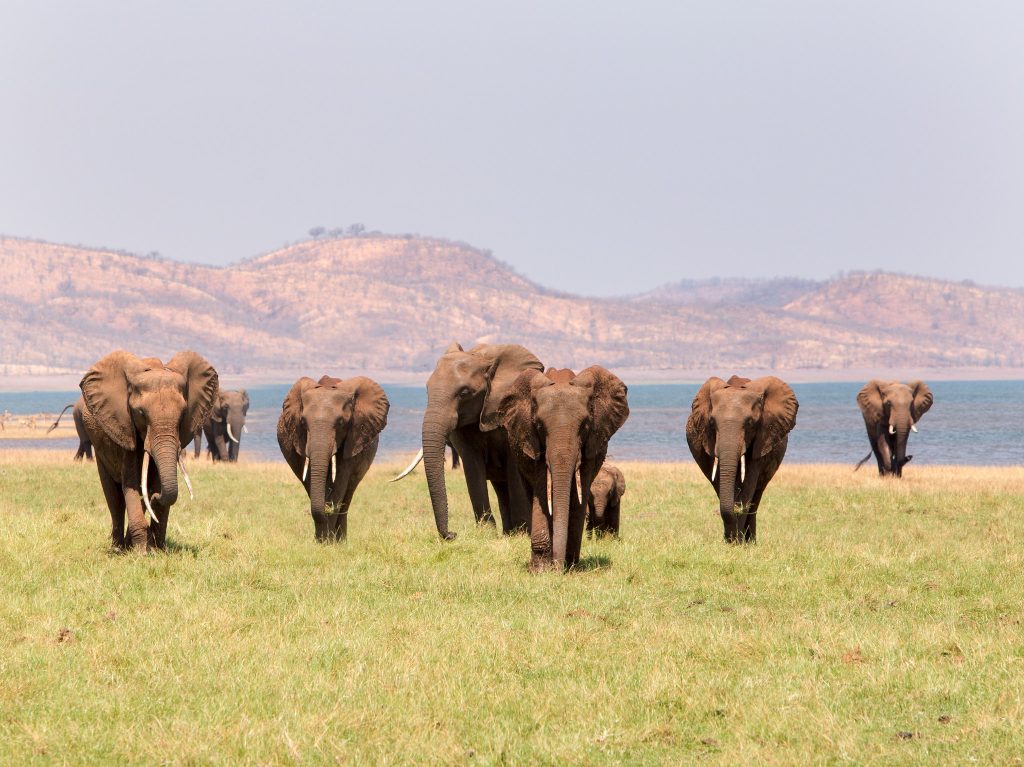
A Kruger National Park safari is worth it for first-time safari travellers and families, because it offers the Big Five and public rest camps at a far lower daily cost than lodge-only parks. Travellers who mainly want solitude and off-road tracking get better value from a few nights in a private reserve or concession lodge.
A Kruger National Park safari needs at least three nights for a fair chance at most of the Big Five in the south, and four to five nights to add the central plains around Satara. With only one or two nights, a guided morning drive plus a night drive gives more sightings per hour than driving yourself.
Yes, Kruger's tourist roads are tarred or graded gravel and an ordinary hire car manages them. A higher vehicle helps you see over other cars at busy sightings, and you should check whether your rental cover includes gravel roads and tyres.
Kruger is safe for visitors who follow the park rules: stay in your vehicle outside fenced areas and be in camp by gate closing time. After a fatal attack on two tourists in the remote Pafuri section, SANParks increased ranger and surveillance cover in the far north and describes the park as very safe overall.
Kruger is in a low risk malaria area, with the highest risk from November to April. SANParks recommends asking a doctor about prophylaxis, avoiding bites between dusk and dawn with repellent and long clothing, and seeing a doctor about any fever within 12 to 35 days of the visit.
You book SANParks game drives and walks online through SANParks or at the reception of the camp you are staying in, and some smaller camps only take bookings on arrival. Lodge guests book activities through their lodge, and operators include drives in their Kruger safari tours.
Children are welcome in Kruger and the self drive format suits families. Children under 6 cannot join SANParks guided drives, and walks and wilderness trails are limited to those aged 12 and over.
Kruger is open, and most camps and roads were running normally again after the January floods, with repairs continuing on some roads and facilities. Check the notifications page on the SANParks website for road closures before you set a route.
Foreign visitors pay a daily conservation fee of R692 per adult and R345 per child aged 2 to 11 on the current SANParks tariff, charged for every day in the park. SADC nationals pay R296 and R147.
Insight Safari Holidays, a tour operator based in Kampala, can arrange a Kruger safari as part of a wider South Africa trip, from SANParks rest camp stays with guided drives to private reserve lodges, with flights, car hire or transfers organised around the gate times. Browse our safari packages, read about Big Five safaris across Africa, or contact our team with your dates and we will suggest the camps and route that fit.