
Inquire Now
Inquire Now

Zambia safaris are quiet, guide-led trips built around walking in South Luangwa, canoeing and boating on the Lower Zambezi, the big floodplains of Kafue and a stop at Victoria Falls in Livingstone. National park fees are low by regional standards: USD 20 to USD 25 per international visitor per day in the main parks, and about USD 30 per visit for the Zambian side of Victoria Falls.

A 3-day safari in Zambia from Lusaka, with game drives and a guided walking safari in South Luangwa National Park and a boat safari on…
Safari Details
A 4-day Zambia safari from Lusaka to South Luangwa National Park, with day and night game drives, a guided walking safari with an armed ranger…
Safari Details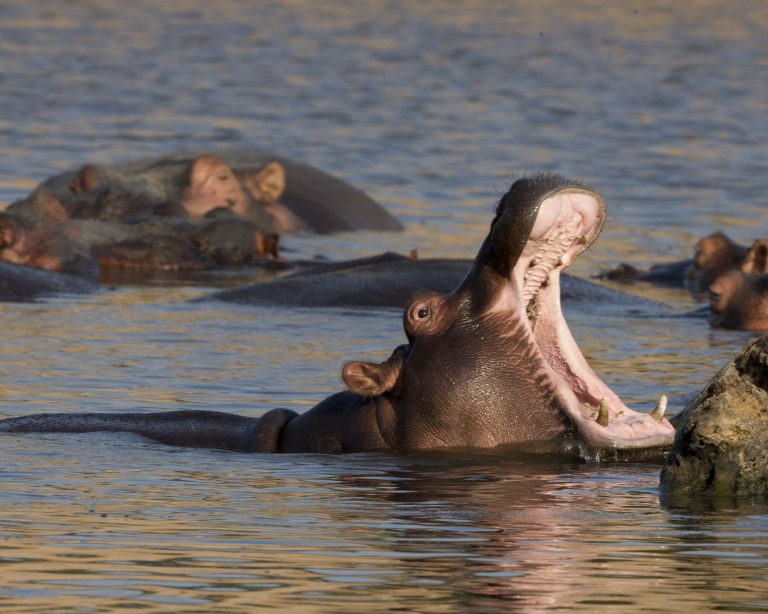
A 5-day walking safari in South Luangwa National Park, Zambia, where walking safaris began: guided bush walks with an armed scout, moving between two small…
Safari Details
A 6-day Zambia safari from Lusaka with game drives, a walking safari and a village visit in South Luangwa National Park, then a boat safari,…
Safari Details
A 9-day Zambia fly-in safari from Lusaka with game drives and walking safaris in South Luangwa, game drives, boat safaris and canoeing in the Lower…
Safari DetailsRead what past guests wrote, in their own words, on the sites where they posted it.
Zambia is the place to go when you want the safari to feel like wilderness rather than a queue of vehicles. Its best parks are large, lightly visited and run largely through small bush camps, and the guiding tradition leans towards time on foot and on the water rather than only game drives.
Three things stand out. First, walking: South Luangwa is widely credited as the place where the modern walking safari began, and walking is still the heart of many trips here. Second, variety on the water: you can canoe past elephants on the Lower Zambezi and take a boat out on the Luangwa or Kafue rivers. Third, night drives are allowed in the national parks, which is not the case in many countries, so leopards, genets and hyenas are part of the picture.
Park fees are modest, but the camps are small and remote, so a Zambia safari is not a budget trip. It suits travellers who have done a first safari elsewhere, or first-timers who would rather see fewer vehicles than tick off every animal at speed.
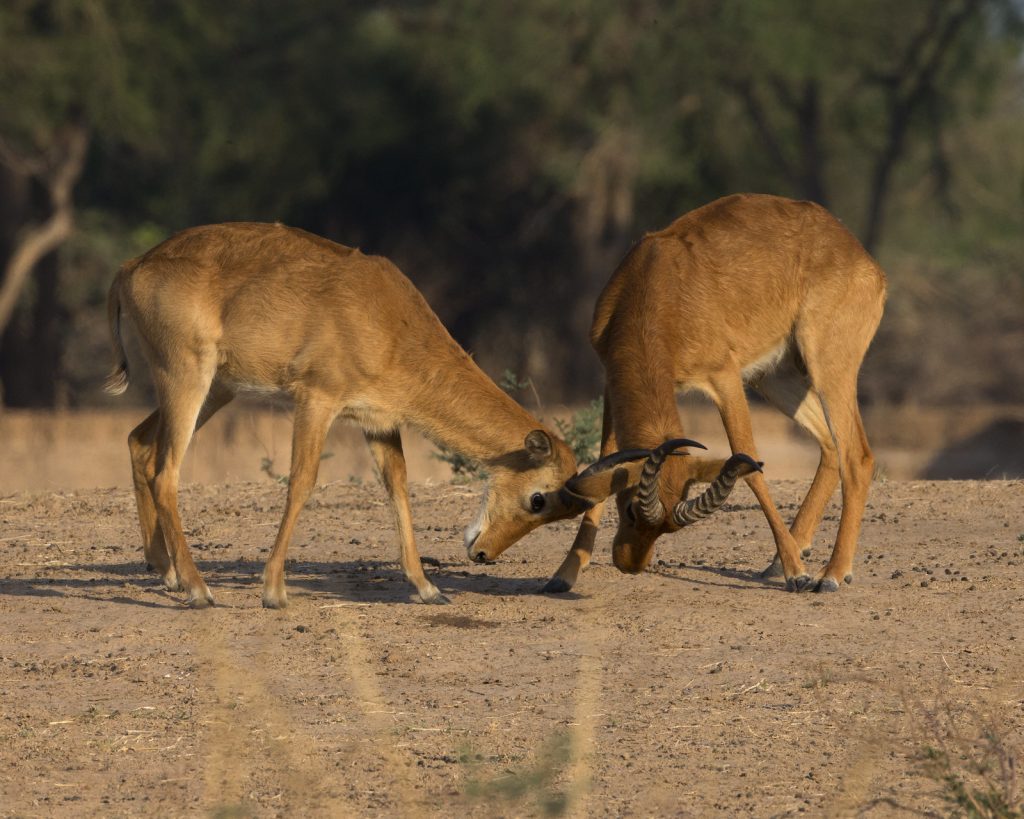
South Luangwa National Park lies in eastern Zambia along the Luangwa River, and it is the country's best-known park. The river's oxbow lagoons and wooded banks hold dense populations of elephant, buffalo, hippo and puku, and the park has a strong reputation for leopards, often seen on night drives.
Walking safaris here follow a simple pattern: a small group, an armed scout from the Department of National Parks and Wildlife and a licensed walking guide. Some camps run walk-only trips, moving between bush camps on foot. Look out for Thornicroft's giraffe, found only in the Luangwa Valley, and from about September to November the carmine bee-eater colonies nesting in the riverbanks.
Our 5-day South Luangwa walking safari shows how a short, walking-focused trip fits together, and our guide to walking safaris in Africa compares Zambia with other countries.
Lower Zambezi National Park runs along the north bank of the Zambezi, directly across the river from Zimbabwe's Mana Pools. The draw here is the river itself: elephants cross between islands, buffalo graze on the floodplain and hippos fill the channels.
Camps offer canoeing in the quieter side channels, boat trips, walking and game drives, and catch-and-release fishing for tigerfish. Because it is close to Lusaka, it pairs easily with South Luangwa or a few nights at Victoria Falls.
Kafue is Zambia's largest national park at about 22,400 square kilometres, and since 2022 it has been managed by African Parks in partnership with the Department of National Parks and Wildlife. It is a park of contrasts: woodland and rivers in the south and centre, Lake Itezhi-Tezhi, and in the far north the Busanga Plains, a floodplain that drains through the dry season.
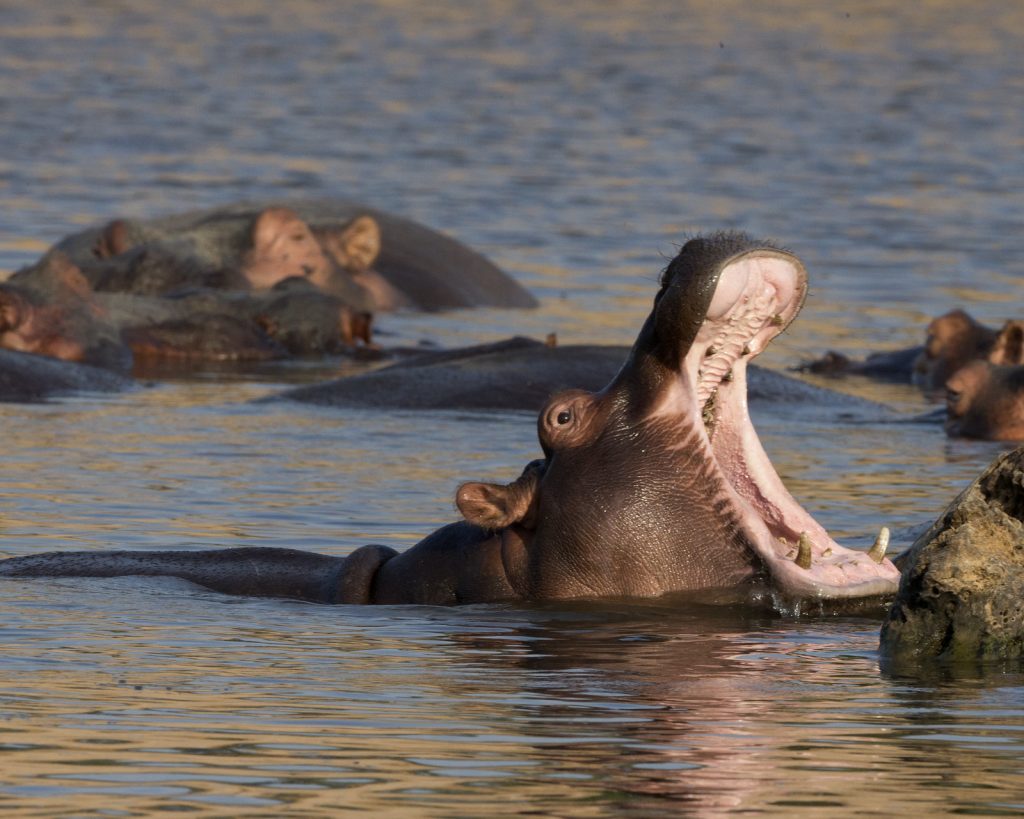
Busanga is the highlight. Once the water recedes, usually from about July to October, the plains fill with red lechwe and puku, and lions and cheetahs hunt in the open. The rest of Kafue is good for leopard and for antelope such as sable and roan. Expect fewer camps and longer distances than in South Luangwa.
Livingstone is the Zambian town for Victoria Falls, which the Zambezi plunges over along a front of about 1.7 kilometres. On the Zambian side you walk close to the edge, cross the Knife-Edge Bridge into the spray and, at low water, can visit Livingstone Island and swim in Devil's Pool, which usually opens from about mid-August to January depending on water levels.
The small Mosi-oa-Tunya National Park, upstream of the falls, holds giraffe, zebra and antelope and offers guided walks to see white rhinos. Most visitors also take a sunset boat trip on the upper Zambezi, and adrenaline seekers raft the Batoka Gorge below the falls.
Liuwa Plain National Park, in western Zambia near the Angolan border, is a vast grassland managed by African Parks with the Department of National Parks and Wildlife and the Barotse Royal Establishment. When the rains arrive, around November, it hosts what African Parks describes as Africa's second-largest wildebeest migration, followed closely by large hyena clans.
Liuwa is remote, with very limited accommodation and access by charter flight or a long 4x4 journey. It suits experienced safari-goers and photographers, and is best added as a specialist extension.
North Luangwa National Park is the wilder neighbour of South Luangwa, with no mass tourism and only a few seasonal camps that focus on walking. Twenty-five black rhinos were reintroduced here between 2003 and 2010, and it holds Zambia's only black rhino population. Visitors usually arrive by charter flight, and most camps open only in the dry season.
How you travel in Zambia shapes the whole trip, so choose the style before choosing the camps.
Zambia's signature activity. Walks run in South and North Luangwa, Lower Zambezi and Kafue, usually in the cool morning hours with an armed scout and a guide. You see less big game than from a vehicle, but far more of tracks, birds and the small details of the bush.
Canoe trips run mainly on the Lower Zambezi, from half-day paddles to multi-day trails. Boat trips are offered on the Zambezi, Luangwa and Kafue rivers and on Lake Itezhi-Tezhi, and are a good way to see elephants drinking and birds along the banks. Anglers can read more in our guide to fishing in Africa.
Scheduled and charter light aircraft link Lusaka, Livingstone, Mfuwe and the Lower Zambezi and Kafue airstrips. Flying saves long road days and is the usual way to combine two or three parks in a week. Expect soft-bag luggage limits.
Road trips work for Livingstone, southern Kafue and the Lower Zambezi from Lusaka. Distances to the Luangwa Valley are long, and some park roads close in the rains, so road safaris are best kept to the dry season.
Zambia's park fees are among the lowest in the region, but camps are small and often remote, so accommodation and flights make up most of the cost. The table shows daily park fees for international visitors as published by Zambia Tourism for 2025, which remained the latest published schedule in 2026.
| Park or site | International visitor | Notes |
|---|---|---|
| South Luangwa | USD 25 per day | USD 30 for self-drivers |
| Lower Zambezi | USD 25 per day | USD 30 for self-drivers |
| North Luangwa | USD 20 per day | USD 25 for self-drivers |
| Kafue | USD 20 per day | Managed by African Parks |
| Mosi-oa-Tunya National Park | USD 10 per day | The game park above the falls |
| Victoria Falls, Zambian side | About USD 30 per visit | Raised from USD 20 in January 2026 |
| Liuwa Plain | Set by African Parks | Confirm when booking |
Foreign-registered vehicles under three tonnes pay USD 15 per day. Fees are set by government and park authorities and can change without notice, so check the current figures when you book. At most lodges, park fees are added to the room rate rather than paid at the gate.
The best time for a Zambia safari is the dry season from June to October, when the bush thins out and animals stay close to the rivers. September and October give the best game viewing but are hot. From November to April, the green season, many bush camps close and some roads become impassable, though South Luangwa keeps some camps open and the birding is excellent.
| Months | Safari conditions | Victoria Falls |
|---|---|---|
| January to March | Rains; many camps closed, lush and green | Water rising |
| April to May | Rains ending; camps reopening | Highest flow, heavy spray |
| June to August | Dry and cool; good game; Busanga opens | Strong flow, clearer views |
| September to October | Hot and dry; best game viewing | Falling; Zambian side thins |
| November to December | Rains begin; Liuwa wildebeest arrive | Lowest; Devil's Pool season |
Seven to ten days is the sweet spot: two or three nights at Victoria Falls, three or four in South Luangwa and two or three on the Lower Zambezi. With five days, choose one park plus the falls. With two weeks, add Kafue and the Busanga Plains, or cross into Botswana. Allow for flight connections in Lusaka, which can add half a day each way.
For Victoria Falls itself, the Zimbabwe side has more of the classic face-on viewpoints, while the Zambian side gets you closer to the water and has Devil's Pool. For safaris, Zambia stands out for walking and value.
| Factor | Zambia | Zimbabwe | Botswana | Tanzania |
|---|---|---|---|---|
| Victoria Falls | Close-up, Devil's Pool | Widest views all year | Day trip from Kasane | Not nearby |
| Signature activity | Walking safaris | Walking and canoeing | Mokoro in the Delta | Migration game drives |
| Main park fees | USD 20 to 25 | USD 18 to 30 | Higher, low-volume model | Higher, especially Serengeti |
| Crowds | Low | Low | Low | Busy in peak areas |
Zambia sits at the centre of southern Africa's best safari circuit. From Livingstone you can cross to Victoria Falls town in Zimbabwe, or drive about an hour to the Kazungula crossing for Chobe National Park in Botswana, then fly on to the Okavango Delta. Our 8-day Victoria Falls, Chobe and Moremi safari follows that route. Lusaka also connects to East Africa, so Zambia can be paired with gorilla trekking in Uganda.
Yes, if you value quiet parks and expert guiding over seeing the Big Five in a few days. South Luangwa has excellent general game, leopards and night drives, and pairs well with Victoria Falls. First-timers who want rhinos alongside lions and elephants in one park may prefer South Africa or Kenya, then visit Zambia on a later trip.
International visitors pay USD 25 per day in South Luangwa and Lower Zambezi, and USD 20 per day in Kafue and North Luangwa, based on the latest schedule published by Zambia Tourism. Mosi-oa-Tunya National Park is USD 10, and the Zambian side of Victoria Falls is about USD 30 per visit. Fees can change, so confirm them when booking.
Most visitors do not. Zambia waived visas for nationals of about 167 countries, including the UK, USA, EU countries, Canada, Australia and Uganda, after adding 53 countries in January 2025. Others pay USD 50 for a single-entry visa. Check the Zambia Department of Immigration before travelling, as lists and fees change.
The KAZA UNIVISA is a joint visa for Zambia and Zimbabwe costing USD 50 and valid for up to 30 days. It allows repeated crossings between the two countries and day trips to Botswana through Kazungula. Zambia issues it at Lusaka and Livingstone airports and the Victoria Falls and Kazungula borders, for eligible nationalities.
June to October is best, with September and October giving the strongest game viewing as water dries up. The Busanga Plains in Kafue are usually accessible from about July. November to April is the green season, when many camps close, but it suits birders and visitors to Liuwa Plain's wildebeest migration.
Not easily in one park. Lion, leopard, elephant and buffalo are common in South Luangwa, Lower Zambezi and Kafue. Zambia's only black rhinos live in North Luangwa, and white rhinos can be seen on guided walks in Mosi-oa-Tunya National Park near Livingstone, so a Big Five trip means combining areas.
Walking safaris in Zambian national parks are led by licensed walking guides with an armed wildlife scout, and groups are kept small. Guides brief you before setting out on how to walk in single file and what to do around animals. Following their instructions is the key to safety, and walks avoid approaching dangerous animals closely.
Zimbabwe has more face-on viewpoints and keeps a strong flow even at low water, so it is better for the classic view. Zambia gets you closer to the edge and offers Devil's Pool from about August to January. Visiting both is easy with the KAZA UNIVISA or a short border crossing.
Insight Safari Holidays can plan a Zambia safari around South Luangwa, the Lower Zambezi and Victoria Falls, on its own or combined with Botswana or East Africa. Contact us with your dates and what you most want to see.
Share your dates, group size, budget and the wildlife you most want to see.
A safari consultant sends a tailor-made itinerary with lodges, permits and travel times. Change anything you like.
We book your park fees, lodges, flights and guide, and look after you from arrival to departure.
A locally owned and established safari company operating in Uganda, Rwanda, Tanzania and Kenya. We plan and manage safaris with one clear responsibility in mind: to ensure that travel benefits the places, people, and wildlife that make it possible.
Every safari is carefully planned around your interests, schedule, comfort level, and travel goals.

Experienced safari consultants providing clear communication, detailed planning, and dependable service throughout.


