
Inquire Now
Inquire Now

A Botswana safari is quiet, remote and water-led: you explore the Okavango Delta by mokoro and boat, watch elephants along the Chobe River and look for wild dogs and big cats in private concessions with few other vehicles. Government park fees are modest, around BWP 270 to 380 per non-resident adult per day in reserves such as Chobe and Moremi, but most of the cost sits in the camps and light-aircraft flights, because Botswana deliberately keeps visitor numbers low.

A 3-day camping safari from Maun into the Okavango Delta in Botswana, with two nights at a tented camp, mokoro (dug-out canoe) trips, guided walks…
Safari Details
A 4-day safari from Maun into the Okavango Delta in Botswana, with two nights at a tented camp, mokoro (dug-out canoe) excursions, guided walks and…
Safari Details
A 6-day Botswana safari from Maun with game drives in Moremi Game Reserve, a boat safari in the Okavango Delta, game drives in the Khwai…
Safari Details
An 8-day Botswana safari from Maun with mokoro trips and nature walks in the Okavango Delta, game drives in Moremi, Savuti and along the Chobe…
Safari DetailsRead what past guests wrote, in their own words, on the sites where they posted it.
Botswana runs its safari industry on a low-volume, high-value model. Much of the north is divided into large private concessions, each leased to one or two operators who keep camps small and limit the number of vehicles. The result is that you often watch lions or wild dogs with no other vehicle in sight, something that is hard to find in the busier parks of East Africa.
The second difference is water. The Okavango River flows in from the Angolan highlands and spreads into the Kalahari sand instead of reaching the sea, creating a wetland where you explore by dugout canoe and motorboat as well as by vehicle. Botswana also holds the largest elephant population of any country: the 2022 KAZA aerial survey counted about 131,900, most of them in the north.
Concession camps also offer what national parks often cannot: night drives, guided walks and off-road driving to follow animals. If you want a walking safari or a trip built around photography, Botswana's private areas are among the best places in Africa to do it.
The Okavango Delta is a vast inland delta in north-western Botswana, inscribed as a UNESCO World Heritage Site in 2014. Floodwater from Angola's summer rains takes months to filter south, so the Delta is fullest from about June to August, in Botswana's dry winter. That timing draws animals from the surrounding dry country onto the islands and floodplains just as the bush elsewhere is at its driest.
Activities depend on the camp and the water level. Water camps focus on mokoro trips, where a poler guides a dugout through reed channels and lily lagoons, and on boat trips for birds, hippos and red lechwe. Land and mixed camps add game drives and walks on the larger islands. For the full picture of camps, regions and activities, see our Okavango Delta safaris guide.
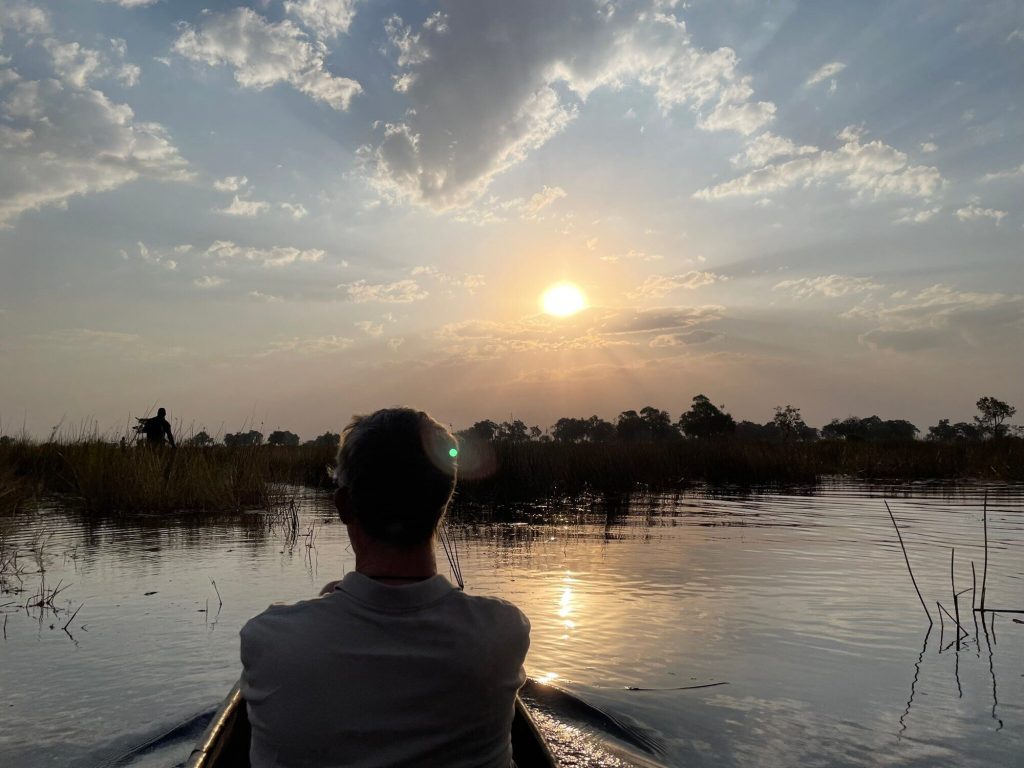
Moremi Game Reserve covers roughly 5,000 square kilometres of the eastern Okavango, including Chief's Island and the Xakanaxa and Khwai areas. It was set aside in 1963 at the request of the local BaTawana community and is one of the few parts of the Delta open to self-drive visitors and mobile safaris as well as to lodge guests.
Moremi mixes floodplain, lagoon and mopane woodland, so it holds a wide range of wildlife: lions, leopards, wild dogs, elephants, buffalo and many antelope species. Because it is a public reserve, vehicles stick to roads and game drives end at dusk. The neighbouring Khwai community area, by contrast, allows night drives and walks.
Chobe National Park, Botswana's first national park, covers about 11,700 square kilometres in the north-east. Most visitors see its northern edge, the Chobe riverfront near Kasane, where elephants and buffalo come down to drink in large numbers through the dry season. A boat trip on the Chobe River is the classic way to watch them, along with hippos, crocodiles and water birds.
Savuti, in the park's west, is drier and more remote. It is known for its lions and hyenas, and for the Savuti Channel, which flows in some years and stays dry for long periods in others. Savuti suits travellers who want a sense of space and are happy with longer drives or a short flight.
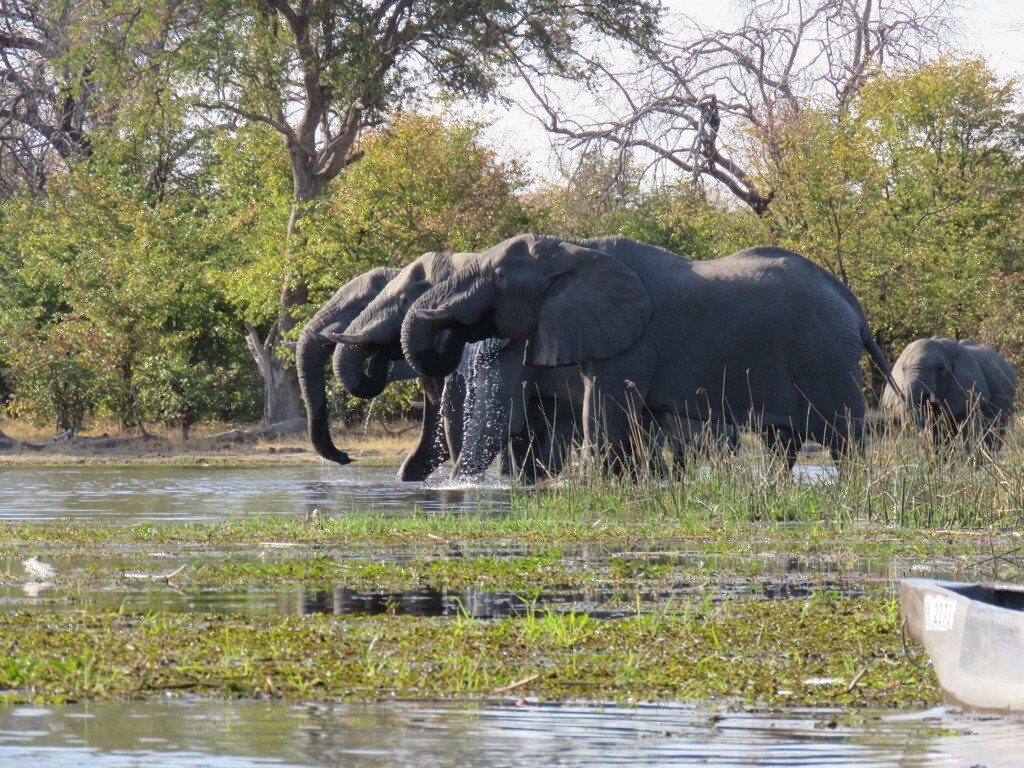
The Linyanti and Kwando areas lie between Chobe and the Okavango, along the river system that forms the border with Namibia's Zambezi Region. They are made up of large private concessions with a handful of camps each, so sightings are shared with very few vehicles. The dry season brings big concentrations of elephants to the river, and the areas are known for wild dogs, lions and leopards.
Concession camps here offer night drives, walking and off-road driving, so they suit second-time safari-goers and photographers. Access is by light aircraft, and these areas are usually combined with a Delta camp on a fly-in itinerary.
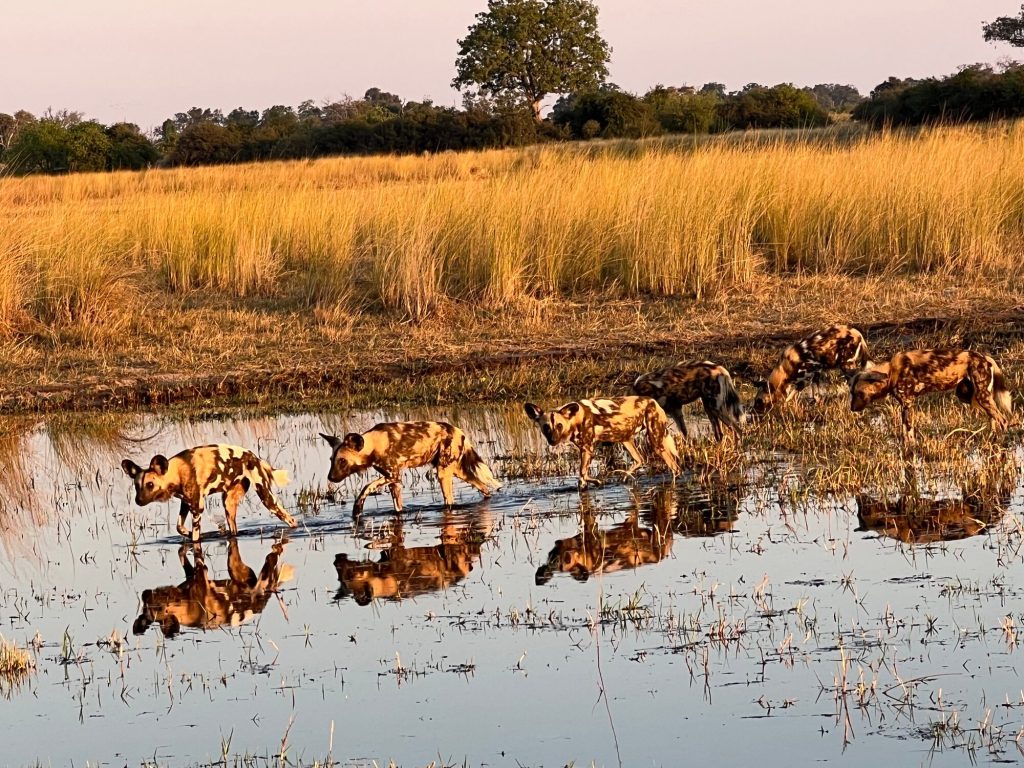
The Central Kalahari Game Reserve is one of the largest protected areas in Africa, covering more than 50,000 square kilometres of grassland, fossil river valleys and scrub. After the summer rains, valleys such as Deception Valley turn green and draw springbok, gemsbok and their predators, including black-maned Kalahari lions and cheetahs.
To the north-east, the Makgadikgadi Pans and Nxai Pan are among the largest salt pans in the world. In the wet season, zebra and wildebeest move onto the grasslands around the pans, while in the dry months they return to the Boteti River. The pans are also known for habituated meerkats and for quad-bike trips onto the open salt in the dry season.
How you travel in Botswana shapes both the cost and the experience more than in most countries. There are three main styles.
Most visitors to the Delta, Linyanti and Kwando fly between camp airstrips in small aircraft. Flights are short, often under an hour, and remove the need for long drives on sand tracks. Luggage limits are strict, usually around 20 kg in soft bags, so pack accordingly. Our fly-in safaris page explains how these trips work.
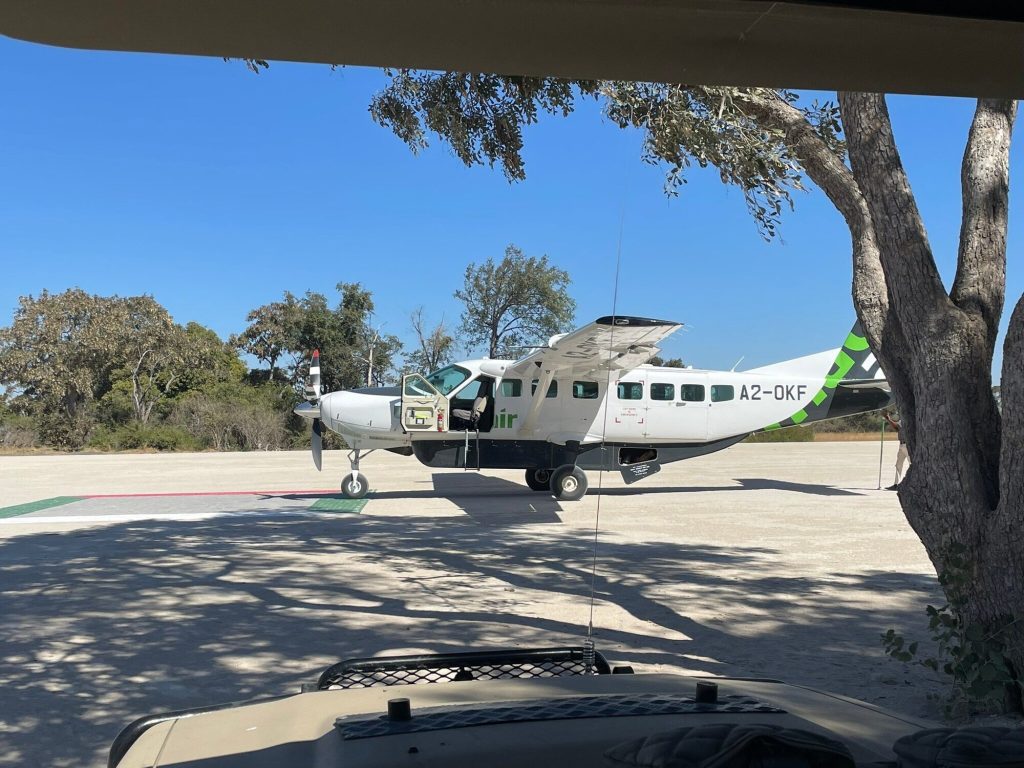
A mobile safari moves by vehicle through Moremi, Khwai, Savuti and the Chobe riverfront, with a crew setting up tented camps at public or private sites. It costs less than flying between lodges and gives a strong sense of the bush, though days involve more driving and facilities are simpler.
Experienced drivers can tour the public reserves in a fully equipped 4x4 with rooftop tents. Campsites in Moremi, Savuti and the Kalahari must be booked well ahead, often months in advance for the dry season, and deep sand and water crossings require real off-road skill. Self-drive suits people who have done it before elsewhere in Africa.
Government park fees in Botswana are a small part of the total. The larger costs are camp rates, concession fees and light-aircraft flights, which reflect the country's low-volume policy. The table shows the fixed fees we could verify.
| Fee | Amount | Notes |
|---|---|---|
| Chobe and Moremi entry, non-resident adult | About BWP 270 to 380 per day | Set by the Department of Wildlife and National Parks; an increase has been proposed |
| Children | Reduced rate; under-8s usually free | Confirm at booking |
| Private concession conservation fees | Varies by concession | Normally included in camp rates |
| Public campsites (self-drive) | Charged per person per night | Paid to the private site operators, separate from park entry |
| Visa (UK, US, EU) | None for stays up to 90 days | Other nationalities check before travel |
Botswana's fees were revised in 2022, and the government discussed a further rise for non-residents in early 2026 that was postponed. Because rates are in flux, we confirm current fees when we quote. A US$30 Tourism Development Levy announced in 2017 was withdrawn after industry objections; we found no levy currently charged at entry, but check before you travel.
The best time for a Botswana safari is the dry season from June to October, when the Delta is flooded and wildlife gathers at permanent water. The green season from December to March brings lower rates, newborn animals, migrant birds and the best of the Kalahari, at the cost of heat, storms and more dispersed game in the north.
| Months | Conditions | Best for |
|---|---|---|
| January to March | Hot, wet, green; afternoon storms | Kalahari and Makgadikgadi, birding, lower rates |
| April to May | Rains ending, cooler, floods arriving | Good value, mixed land and water activities |
| June to August | Dry, cold nights, Delta at its fullest | Mokoro trips, peak game viewing |
| September to October | Hot and dry, animals at water | Chobe elephants, predators, Linyanti |
| November to December | First rains, heat breaking | Calving season, quieter camps |
Seven to ten days is a good length for a first Botswana safari: three or four nights in the Okavango, two or three in Moremi or Linyanti, and two on the Chobe riverfront. With five days, focus on the Delta and one other area. With twelve days or more, add the Kalahari or the Makgadikgadi Pans, or finish at Victoria Falls.
Because camps are linked by short flights, Botswana loses less time to transfers than road-based safaris. Allow at least two nights per camp so you get full days of activities rather than spending half of each stay arriving and leaving. Our 6-day Botswana safari and 8-day Botswana safari show how these routes fit together.
Botswana suits travellers who want exclusivity, water-based activities and wild dogs, and who are happy to pay more for fewer vehicles. Kenya and Tanzania suit first-timers who want the wildebeest migration, high animal densities on open plains and a wider range of budgets.
| Factor | Botswana | Kenya and Tanzania |
|---|---|---|
| Signature experience | Okavango Delta by mokoro | Serengeti and Masai Mara migration |
| Vehicles at sightings | Few, especially in concessions | Often many in peak season |
| Activities | Drives, boats, mokoro, walks, night drives | Mainly drives; walks and night drives in conservancies |
| Main transport | Light aircraft | Road, with some flights |
| Budget options | Limited; mobile or self-drive | Wide range |
| Peak season | June to October | June to October, plus calving in Tanzania |
Botswana combines easily with its neighbours. Kasane sits close to the point where Botswana, Zambia, Zimbabwe and Namibia meet, about 80 km by road from Victoria Falls, so a night or two at the Falls fits naturally at the start or end of a Chobe and Delta trip. You can stay on the Zimbabwe side at Victoria Falls town or the Zambia side at Livingstone. Our 8-day Victoria Falls, Chobe and Moremi safari follows this route.
Other common pairings are Cape Town or the Kruger National Park in South Africa, since most international flights connect through Johannesburg, and Namibia's Zambezi Region, which borders the Linyanti and Kwando. From Uganda, Botswana can follow gorilla trekking via a connection in Johannesburg.
For many travellers, yes. Botswana's high prices pay for small camps, few vehicles and large private areas where night drives, walks and off-road tracking are allowed. You also get experiences not found in East Africa, such as mokoro trips in the Okavango Delta. If budget matters most, mobile camping safaris and travel in the green season or shoulder months lower the cost considerably.
Non-resident adults pay roughly BWP 270 to 380 per day to enter public reserves such as Chobe National Park and Moremi Game Reserve, set by the Department of Wildlife and National Parks. Children pay less. Private concessions charge separate conservation fees, normally built into camp rates. A fee increase was proposed for 2026 and postponed, so confirm current rates before you travel.
British, American and most European Union passport holders can visit Botswana for up to 90 days without a visa. Your passport must be valid for at least six months after arrival and have at least three blank pages. Children under 18 need a full birth certificate, and a consent affidavit if not travelling with both parents. Other nationalities should check Botswana's immigration rules before booking.
June to October is the best time for the Okavango Delta. Floodwater from Angola arrives during Botswana's dry winter, so channels are full for mokoro trips just as animals gather near permanent water. July to September is the busiest period. April, May and November offer good conditions at lower rates, while the wet summer months suit birders.
Most travellers connect through Johannesburg to Maun, the gateway to the Okavango Delta and Moremi, or to Kasane, the gateway to Chobe. Airlink flies both routes, with some flights from Cape Town to Maun. From Maun and Kasane, light aircraft link the safari camps. Kasane can also be reached by road from Victoria Falls in Zimbabwe or Livingstone in Zambia.
Yes, experienced drivers can tour Moremi, Chobe, the Central Kalahari and the Makgadikgadi in a fully equipped 4x4. Roads in the reserves are deep sand, sometimes with water crossings, and there are no fences around campsites. Campsites must be booked in advance, often months ahead for the dry season. Self-drive does not give access to private concessions.
Botswana can work well for families, but many camps set minimum ages, often around six to twelve years, especially for mokoro trips and walks. Some camps offer private vehicles and family tents. Malaria is present in the north, which some parents prefer to avoid with young children. See our family safaris guide for options.
Insight Safari Holidays can arrange a Botswana safari through the Okavango Delta, Moremi and Chobe, on its own or combined with Victoria Falls, South Africa or gorilla trekking in Uganda. Contact us with your travel dates, how many days you have and what you most want to see.
Share your dates, group size, budget and the wildlife you most want to see.
A safari consultant sends a tailor-made itinerary with lodges, permits and travel times. Change anything you like.
We book your park fees, lodges, flights and guide, and look after you from arrival to departure.
A locally owned and established safari company operating in Uganda, Rwanda, Tanzania and Kenya. We plan and manage safaris with one clear responsibility in mind: to ensure that travel benefits the places, people, and wildlife that make it possible.
Every safari is carefully planned around your interests, schedule, comfort level, and travel goals.

Experienced safari consultants providing clear communication, detailed planning, and dependable service throughout.


