
Inquire Now
Nyerere safaris combine game drives, Rufiji River boat trips and ranger-led walks in Tanzania's largest national park, a stronghold for wild dogs. Fly in from Dar es Salaam or Zanzibar and let us arrange your camp.
Nyerere National Park is Tanzania's largest national park, more than 30,000 square kilometres of southern bush carved from the northern Selous Game Reserve. It is the place to combine game drives with boat safaris on the Rufiji River and ranger-led walks, and one of Africa's strongholds for wild dogs. Entry costs USD 70 per foreign adult on the TANAPA tariff, and most visitors fly in from Dar es Salaam or Zanzibar for three or four nights between June and October.
 3 Days
 4 Days
 5 Days
Prefer your own dates and lodges? Ask for a tailor-made quote.

The 3 Day Tanzania Safari Lodge package to Ngorongoro Crater, Tarangire and Lake Manyara covers the best of wildlife on a game drive safari.
Safari Details
Prepare yourself for a tour filled with thrilling encounters with the Great Serengeti Wildebeest Migration, Big Cats and the renowned Big Five.
Safari Details
Explore the world renowned Ngorongoro Crater, a wonder teeming with wildlife and delve into the enchanting wonders of Lake Manyara National Park.
Safari Details
In 6 days you'll explore Lake Manyara National Park, witness the captivating Serengeti with its wildlife and marvel at the incredible Ngorongoro Crater, where you…
Safari Details
7-Day Wildlife Safari Adventure in iconic national parks like Serengeti, Ngorongoro Crater & Lake Manyara. Witness the Great Wildebeest Migration & spot the Big Five.
Safari Details
8 day safari, witness the awe inspiring herds of wildebeest and zebras, catch glimpses of predators like lions, cheetahs and leopards and marvel at the…
Safari Details
9-Day Wildlife Safari Adventure. Witness Serengeti's Great Wildebeest Migration, encounter diverse wildlife in Ngorongoro Crater, and customize your dream safari.
Safari Details
Our 12 day safari lets you visit the top national parks in Tanzania, lots of game viewing, see the big five animals and more.
Safari DetailsIn this guide: Wildlife · Why visit · About the park · Location · What sets it apart · Attractions · Things to do · Best time · Getting there · Fees · Where to stay · Sample trips · FAQs
Nyerere holds the full cast of a southern Tanzanian safari: lions, elephants, buffalo, hippos, crocodiles, giraffes, leopards and hyenas, with African wild dogs as the headline species. Tanzania National Parks (TANAPA) describes the park as a stronghold for wild dogs, and its bird list runs to more than 430 species.
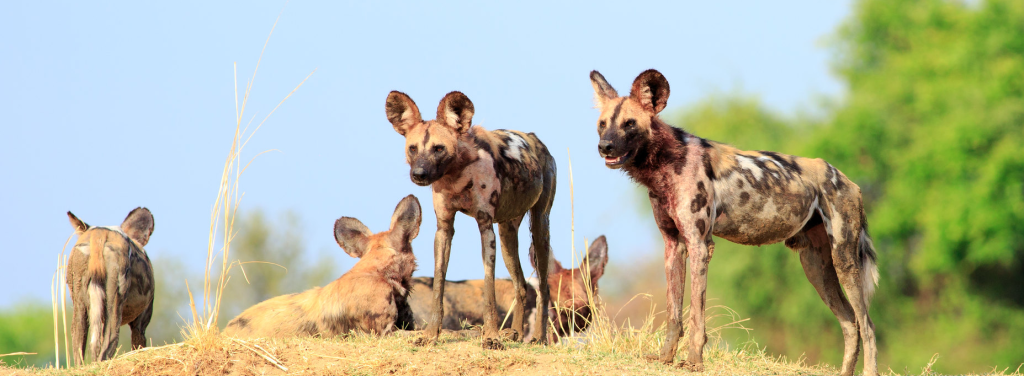
Wild dogs are endangered across Africa and absent from most northern Tanzanian itineraries, which is why Nyerere matters. Packs range widely, so sightings are never promised, but the odds here are better than in almost any other park in East Africa. Guides say the denning months in the middle of the dry season are the easiest time, because a pack with pups stays in one area for weeks.
Lions are seen on most game drives around the lakes north of the Rufiji, where they wait for animals coming to drink. Leopards and spotted hyenas are present too, though leopards take patience in the thick riverine bush. Cheetahs are not a Nyerere animal; travellers set on cheetahs should look to the Serengeti or Ruaha.
The river and its lakes carry large numbers of hippos and Nile crocodiles, best seen from a boat. Elephants come down to the water in the dry months. Their numbers tell a harder story: the wider Selous held over 100,000 elephants in the seventies and lost most of them to poaching, with surveys a decade ago counting about 13,000. Herds are recovering, but they remain warier than those of the northern parks.
TANAPA lists more than 430 bird species for Nyerere. Boat trips bring African fish eagles, kingfishers, bee-eaters nesting in the sandbanks and African skimmers working the channels. The green season, from November, adds migrants.

Visit Nyerere for variety and space: it is one of the few Tanzanian parks where a single stay can include a game drive, a boat safari and a walk, and TANAPA notes its low visitor density. It suits travellers who have done the northern circuit, or who want a safari within reach of Dar es Salaam or the Zanzibar beaches.
It suits first safaris less well if the goal is to tick off animals quickly. Game is more spread out than in the Serengeti or Ngorongoro, there are no rhino sightings to plan around, and the bush is thick outside the dry months. A traveller who answered a planning question on Reddit put the trade plainly: the park was "magnificent, uncrowded", and their group still saw four of the Big Five on day one.
Nyerere National Park was created when Tanzania split off the northern part of the Selous Game Reserve as a national park, and it was named after Julius Nyerere, Tanzania's first president. At more than 30,000 square kilometres it is the largest national park in the country.
The Selous itself dates to 1896, when the German colonial government first protected the area, and took its name from the hunter Frederick Selous in 1922. The reserve is a UNESCO World Heritage Site. The southern section remains a game reserve; the northern section, where the photographic camps have always been, is the national park managed by TANAPA. Many operators and maps still write "Selous", so expect both names on quotes and flight tickets.
Nyerere lies in southeastern Tanzania, southwest of Dar es Salaam, with the Rufiji River running through its tourist core. By road the eastern gate is 184 to 230 kilometres from Dar es Salaam depending on the route, and the park sits on the southern safari circuit with Mikumi and Ruaha.
The visitor area is a small part of the whole: the lakes and channels north of the Rufiji between the eastern Mtemere side and the Matambwe side in the northwest. Operators generally name Mtemere as the main gate for road arrivals from Dar es Salaam and Matambwe for arrivals from Morogoro.
Three things set Nyerere apart: water, walking and scale. The Rufiji is Tanzania's largest river, and its oxbow lakes let you watch game from a boat, which the Serengeti and Ngorongoro cannot offer. Walking safaris with an armed ranger are a standard activity here, not a special request.
| Question | Nyerere | Serengeti |
|---|---|---|
| Entry, foreign adult | USD 70 | Higher |
| Boat safaris | Yes, on the Rufiji and lakes | No |
| Wild dogs | A stronghold | Rare |
| Wildebeest migration | No | Yes |
| Nearest hub | Dar es Salaam, Zanzibar | Arusha |
The comparison shows where each park wins. Nyerere offers more ways to see animals and fewer vehicles at a sighting; the Serengeti offers more animals per hour.
The main attractions in Nyerere are the Rufiji River, the chain of lakes north of it, Stiegler's Gorge and the hot springs at Maji Moto. Almost every camp is placed to reach the river or a lake within a drive of minutes.
The Rufiji splits into channels, sandbanks and lagoons lined with borassus palms. It is the park's water supply in the dry season and the route for boat safaris, with hippos, crocodiles and waterbirds in view for most of a trip.
These oxbow lakes hold water all year and draw game from the surrounding woodland as the bush dries. Lions around Lake Manze are known for hunting in daylight near the shore. Game drives in the dry season usually loop between the lakes.
Stiegler's Gorge is where the Rufiji cuts through a deep canyon in the west of the tourist area; it is now also the site of the Julius Nyerere hydropower dam, so ask your camp what is open to visitors. The Maji Moto hot springs near Lake Tagalala are a common stop on a full day drive, with pools cool enough to sit in lower down.
Nyerere's activities are game drives, boat safaris, guided walks, fly camping and sport fishing, each with its own TANAPA fee on top of park entry. Most camps include two activities a day in a full board rate.
A boat safari costs USD 20 per person in TANAPA fees and usually runs for two to three hours in the late afternoon. TANAPA requires life jackets. It is the best way to photograph birds and hippos at eye level, and the sunset over the river is the picture most people take home.
Morning and afternoon drives in open vehicles cover the lake circuits. A full day with a packed lunch reaches Tagalala and the hot springs. Night game drives are on the TANAPA tariff at USD 50 per person; not every camp runs them, so ask before you book.
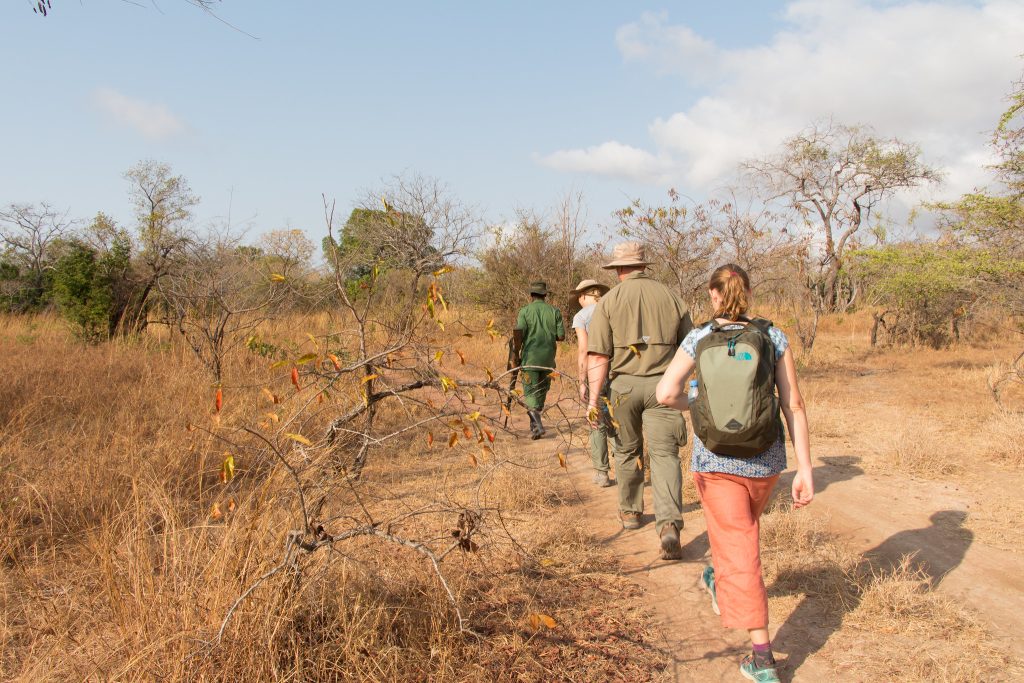
Walks leave at first light with an armed ranger and take two to four hours. TANAPA charges USD 20 for a short walk and USD 25 for a long one, and asks that walks be booked ahead. Expect tracks, dung, birds and plants more than close encounters with big game.
Fly camping means a night in a simple mosquito net tent away from the main camp, usually after a walk; TANAPA's fee is USD 50 per person. Sport fishing on the river carries a USD 25 fee and is catch and release at most camps.
The best time to visit Nyerere is June to October, when the bush is dry and thin and animals gather at the river and lakes. The rains run from about November to May; roads turn to mud, and some camps close for the wettest weeks around April and May.
TANAPA prices accommodation concessions and special campsites at their high rate from July to September, so June and October give dry season game at slightly softer demand.
You reach Nyerere by light aircraft or by road, almost always from Dar es Salaam or Zanzibar. Flying takes under an hour; driving takes most of a day.
Scheduled and charter flights land at airstrips inside the park, including Mtemere, Siwandu, Beho Beho and Kiba. Your camp tells you which strip to book, and a vehicle meets the plane. Luggage limits on these small aircraft are strict, commonly 15 kilograms in a soft bag; check your ticket.
The usual road route runs south from Dar es Salaam through Kibiti towards the eastern gate. Allow about 6 hours for 184 to 230 kilometres, because the last stretch is rough, and use a 4x4, as TANAPA recommends. A second approach comes from Morogoro on the northwestern side, which suits trips that include Mikumi.
The TAZARA railway from Dar es Salaam passes the northern edge of the park, and some operators arrange a pick-up near Matambwe. Timetables are unreliable, so treat the train as an adventure and never as a tight connection.
Park entry to Nyerere costs USD 70 per foreign adult and USD 20 per child aged 5 to 15 on the TANAPA tariff, with East African citizens paying in shillings. Activities, camping and the concession fee charged to lodge guests are added per person.
| Fee, foreign visitor | TANAPA rate |
|---|---|
| Park entry, adult | USD 70 |
| Park entry, child 5 to 15 | USD 20 |
| Concession fee for lodge guests, high season | USD 60 per night |
| Boat safari or canoeing | USD 20 |
| Walking safari, short or long | USD 20 or USD 25 |
| Night game drive | USD 50 |
| Public campsite | USD 30 per night |
The tariff year runs from 1 July to 30 June, so confirm rates for trips that cross July.
Accommodation in Nyerere ranges from TANAPA campsites at USD 30 a night to full board tented camps on the river and lakes. Camp rates change by season and were not checked against each property's own rate page for this guide, so none are quoted here.
The long-established camps sit on the Rufiji or beside the lakes: Rufiji River Camp near the eastern gate, Lake Manze Camp and Selous Impala Camp at midrange level, and Siwandu, Beho Beho and Roho ya Selous at the top end. Staying inside puts you on the boat or the lake circuit minutes after waking.
TANAPA runs a rest house at USD 30 per person on its tariff, plus cottages and public campsites at USD 30 per person a night. Special campsites cost USD 60 in the high season. These suit self-drivers and budget groups travelling with a camping crew.
Villages near Mtemere and Mloka have cheaper lodges and camps outside the boundary. You save the concession fee but pay entry each day and lose time at the gate each morning.
Three nights is the sensible minimum for Nyerere, because it lets you do a boat safari, a walk and two or three drives without rushing. Shorter and longer versions work for different trips.
Day one: morning flight, lunch in camp, afternoon boat safari. Day two: dawn walking safari, afternoon game drive around the lakes. Day three: early drive, then the flight back to the coast. This is the classic add-on to a beach holiday.
Day one is the drive, with a short evening drive if time allows. Days two and three split between drives, the boat and a walk, with one full day out to Tagalala and the hot springs. Day four returns to Dar es Salaam by mid afternoon.
A week allows a southern circuit: Mikumi for two nights by road, then Nyerere for three or four. Travellers who want big cats in numbers swap Mikumi for Ruaha and link the two by air.
Day trips from Zanzibar are sold widely. They mean two flights and roughly five hours in the park, in the hot middle of the day, so treat one as a taster and not a substitute for staying.
Partly. Nyerere National Park was created from the northern section of the Selous Game Reserve, which is where the safari camps are. The southern section is still the Selous Game Reserve.
USD 70 per foreign adult and USD 20 per child aged 5 to 15 on the TANAPA tariff. Lodge guests also pay a concession fee, USD 60 a night in the high season, and activities such as boat safaris cost USD 20 each.
Three nights suits most visitors. It covers a boat safari, a walking safari and several game drives. Two nights works on a tight fly-in schedule; a day trip shows you very little.
You can see lions, elephants, buffalo and leopards. Rhinos are not seen on normal safaris here, so Nyerere is a four out of five park in practice.
Yes, for a different kind of safari. Nyerere has boat and walking safaris, wild dogs and few vehicles. The Serengeti has the wildebeest migration and denser game. Many travellers do the Serengeti first and Nyerere on a return trip.
Nyerere is a low-lying, warm river area where malaria is present. Speak to a travel doctor before you go about prevention, and use repellent and the mosquito nets that camps provide.
Insight Safari Holidays, a Uganda-based operator, plans Nyerere National Park trips, by air from Zanzibar or Dar es Salaam or by road with Mikumi. Send your dates and group size, and the team will arrange a quote that shows park fees and VAT line by line.