
Inquire Now
Bwindi gorilla trekking safaris start from four sectors, Buhoma, Ruhija, Rushaga and Nkuringo, in a mountain rainforest in southwestern Uganda. Learn about permits, birding and Batwa visits, then let us plan your trek.
Bwindi Impenetrable Forest National Park, officially Bwindi Impenetrable National Park, is a mountain rainforest in southwestern Uganda that protects about 459 mountain gorillas, almost half of the world's population, the Uganda Wildlife Authority reports. Visitors come to trek gorillas from four sectors, Buhoma, Ruhija, Rushaga and Nkuringo, on a USD 800 permit, and stay on for forest walks, Albertine Rift birding and Batwa cultural visits.
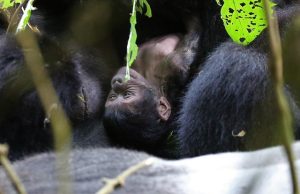 3 Days
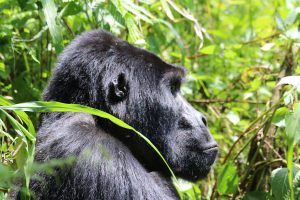 3 Days
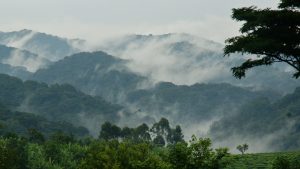 3 Days
Prefer your own dates and lodges? Ask for a tailor-made quote.

3 day gorilla tracking in Bwindi Impenetrable Forest National Park.
Safari Details
4 day gorilla tracking and habituation in Bwindi Impenetrable Forest National Park.
Safari Details
Spend more time with the mountain gorillas of Uganda! Best gorilla safari tour.
Safari Details
Luxury gorilla trekking in Uganda, best primate safari tour.
Safari DetailsBwindi Impenetrable National Park is worth the long trip because it is the most reliable place in the world to stand a few metres from wild mountain gorillas, with more habituated groups than any other park. A trek here ends in one hour with a gorilla family, and UWA's trackers locate the families every morning before visitors set off.
The forest earns a second day. Bwindi holds 120 mammal species and more than 350 birds, including 23 Albertine Rift endemics, UWA says, and its ridge-top villages offer walks with Batwa and Bakiga guides. Travellers who trek and leave the same afternoon see the gorillas and miss the park.
Price is the other reason. Uganda's gorilla permit costs USD 800, a little over half of Rwanda's USD 1,500, and drops to USD 600 in April, May and November.
The main things to do in Bwindi are gorilla trekking, the four hour gorilla habituation visit, guided forest walks, birding and Batwa cultural visits. Every activity runs with a UWA ranger guide and starts from one of the four sector offices.
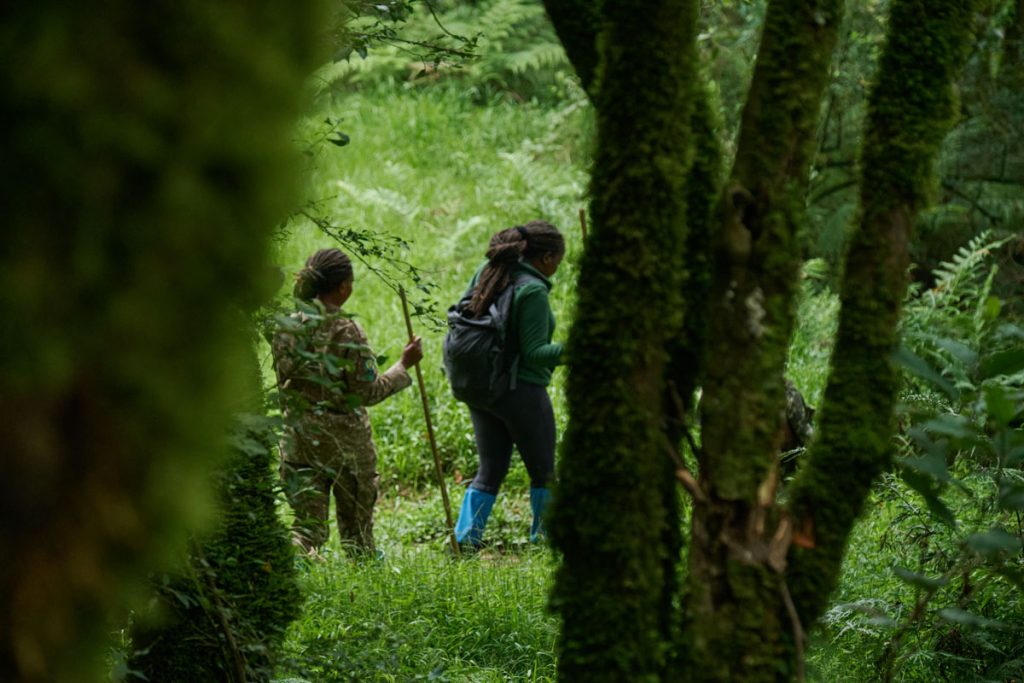
Gorilla trekking in Bwindi is a guided hike of about one to six hours to a habituated family, followed by one hour with the gorillas. UWA allows eight visitors per group per day, sets a minimum age of 15 and asks trekkers to keep 10 metres back. The permit names the sector, so choose it before the lodge.
The gorilla habituation experience gives a small group up to four hours with a family that researchers are still accustoming to people, in the Rushaga sector only. It costs USD 1,500 per foreign visitor on the current tariff and USD 1,800 from January.
Bwindi's guided walks range from short waterfall trails near Buhoma to full day hikes across the forest. The UWA tariff lists a general nature walk at USD 40 per foreign visitor and prices the long routes separately: the Buhoma to Nkuringo walk, the Rushura Hill loop and the bamboo walk in Ruhija.
Birdwatching in Bwindi centres on Buhoma's lower trails, the road through The Neck and Ruhija's high forest, where the walk to Mubwindi Swamp is the route for Grauer's broadbill. A birding walk costs USD 40 per foreign visitor.
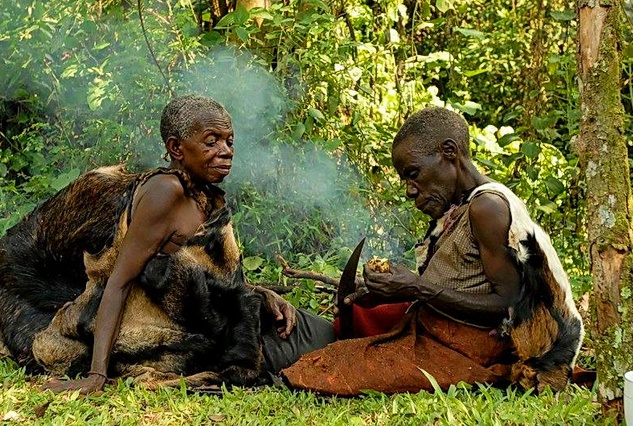
The Batwa forest experience is a walk with Batwa guides, the forest's original inhabitants, who show how their families hunted and gathered here before the park was created. UWA charges USD 40, on top of park entry.
Bwindi's wildlife is led by its mountain gorillas, but the park also shelters chimpanzees, several monkey species, forest elephants and antelopes, and one of the richest bird lists in East Africa. Most animals other than gorillas are heard or glimpsed, not watched at length, because the forest is so dense.
About 459 mountain gorillas live in Bwindi, almost half of the world's total, on UWA's figures. The Mubare group near Buhoma was the first habituated for tourism, in April 1993, and the park now counts 25 habituated groups across its four sectors. Sightings on a trek are close to certain, because trackers stay with each family daily.
Bwindi is one of the few forests where gorillas and chimpanzees share the same range, although the chimps are not habituated and are rarely seen. Trekkers more often meet L'Hoest's monkeys, black and white colobus and baboons at the forest edge. Forest elephants, duikers and giant forest hogs live here too and mostly leave only tracks.
More than 350 bird species are recorded in Bwindi, 23 of them found only in the Albertine Rift, including the African green broadbill and Shelley's crimsonwing. UNESCO counts 202 butterfly species here, 84 percent of Uganda's total.
Bwindi differs from its two neighbours in scale and in forest type: it has by far the most habituated gorilla groups, and its gorillas live in ancient mixed rainforest, not on bamboo covered volcano slopes. Mgahinga Gorilla National Park, also in Uganda, has one habituated group, and Rwanda's Volcanoes National Park opens ten families at nearly twice the permit price.
| Factor | Bwindi | Mgahinga | Volcanoes |
|---|---|---|---|
| Country | Uganda | Uganda | Rwanda |
| Gorilla permit | USD 800 | USD 800 | USD 1,500 |
| Habituation visit | Yes, Rushaga | No | No |
| Golden monkeys | No | Yes | Yes |
Bwindi suits travellers who want the widest choice of dates and lodges, or the habituation visit. Mgahinga suits those who want gorillas and golden monkeys in one small park, and Volcanoes suits short trips from Kigali.
Bwindi Impenetrable National Park covers about 321 square kilometres of steep rainforest between 1,160 and 2,607 metres, managed by the Uganda Wildlife Authority. It began as two forest reserves that were combined in 1942, became a national park in 1991 and was inscribed as a UNESCO World Heritage Site in 1994.
UNESCO describes the forest as a probable ice age refuge, which helps explain its range of life: more than 160 tree species and over 100 ferns. The park is also a water source for the region, feeding five major rivers that run to Lake Edward. Its creation removed the Batwa from the forest, a history the cultural visits now tell in their own words.
Bwindi Impenetrable National Park is in southwestern Uganda, on the edge of the Albertine Rift beside the border with the Democratic Republic of Congo, 512 km by road from Kampala. It spreads across Kanungu, Kabale and Kisoro districts. Buhoma in the north is reached through Kihihi, Ruhija in the east through Kabale, and Rushaga and Nkuringo in the south through Kisoro.
Bwindi's named sights are its trekking sectors and a small number of waterfalls, swamps and viewpoints reached on guided walks. Each sector has its own office, trails and character.
Buhoma is where gorilla tourism began and where the park headquarters sits, with the densest cluster of lodges and the gentlest forest trails. Short walks from here reach the Munyaga waterfalls.
Mubwindi Swamp lies below Ruhija's ridge, a steep descent of several hours there and back that birders make for Grauer's broadbill. It is the wildest corner of the park open to walkers.
The southern sectors sit on high ridges facing the Virunga volcanoes, and on clear mornings the cones line the horizon. Nkuringo's trailheads start at the top of the ridge, so treks here begin downhill and end with the climb.
The best time to visit Bwindi is June to August and December to February, the drier months that UWA recommends for primate tracking, when trails are firmer. Gorilla trekking runs every day of the year, and the gorillas stay in the same forest in every season.
March to May and September to November are wetter, with slower, muddier treks and afternoon rain. April, May and November bring the USD 600 low season permit, which saves USD 200 per person, and lodges are easier to book.
Bwindi's park entry fee is USD 40 per foreign non-resident adult per day and USD 30 for foreign residents, and the gorilla permit costs USD 800 and USD 700, on the UWA conservation tariff. The gorilla permit already includes entry for the day; other activities are charged on top of entry.
| UWA fee | Foreign visitor | Foreign resident |
|---|---|---|
| Park entry, adult | USD 40 | USD 30 |
| Gorilla permit | USD 800 | USD 700 |
| Low season permit | USD 600 | USD 500 |
| Habituation | USD 1,500 | USD 1,000 |
| Birding or nature walk | USD 40 | USD 30 |
| Batwa experience | USD 40 | USD 40 |
Three changes arrive with the tariff that starts in January. The habituation permit rises to USD 1,800 for foreign visitors and USD 1,500 for foreign residents. The long walks go up, with Buhoma to Nkuringo moving from USD 60 to USD 100 and the Rushura Hill and Ruhija bamboo walks from USD 40 to USD 60. A Munyaga waterfalls walk appears at USD 60. Visitors from the rest of Africa pay USD 500 for the gorilla permit, and children aged 5 to 15 pay USD 20 entry.
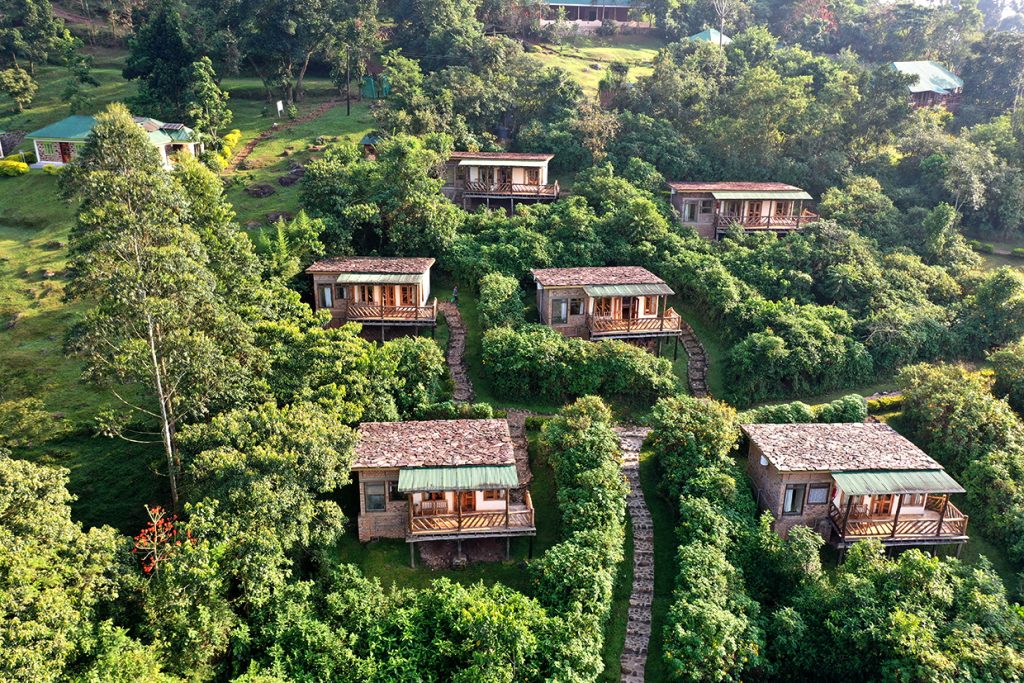
Stay in the sector printed on your gorilla permit, because briefings start at about 7:30am and driving between sectors takes hours on mountain roads. Each sector has its own lodges, from community camps to high end properties.
Buhoma has the widest choice. Mahogany Springs and Buhoma Lodge sit within a short walk of the park office, and the Buhoma Community Rest Camp is the budget option beside the gate, run for the benefit of the village. Volcanoes Safaris publishes its 4 night Bwindi gorilla safari, based at its Buhoma lodge, at USD 7,400 per person sharing in high season and USD 5,620 in low season.
Ruhija is quieter and colder, with a small number of lodges along the ridge road, among them Gorilla Mist Camp. It suits birders and travellers arriving from Kabale or Lake Bunyonyi.
The south offers Rushaga Gorilla Camp near the Rushaga office and Clouds Mountain Gorilla Lodge on the Nkuringo ridge, with more rooms around Lake Mutanda and in Kisoro town. Ask each lodge for its current rates, as most do not publish them.
You can reach Bwindi by road from Kampala in a full day, or by scheduled flight from Entebbe in about 1 hour 10 minutes plus a transfer. UWA recommends a 4WD vehicle on every approach.
The most direct road to Buhoma runs about 390 km on tarmac to Rukungiri, then 82 km of winding murram through Kihihi, UWA says. The alternative follows 414 km of tarmac to Kabale in about six hours, then 120 km of murram through Kanungu. Ruhija is reached from Kabale.
For the southern sectors, most travellers drive to Kabale and on to Kisoro, about 80 km further, and overnight there. Kisoro to Nkuringo is a winding 35 km that takes at least an hour.
Daily scheduled flights link Entebbe with Kihihi airstrip for Buhoma and Ruhija, and with Kisoro airstrip for Rushaga and Nkuringo. Lodges collect guests by 4WD from both.
Safaris coming from Queen Elizabeth National Park drive south through its Ishasha sector, known for tree climbing lions. Buhoma is about 160 km from Mweya and about 64 km from Ishasha, mostly on dirt road.
Travellers who post about Bwindi report hard terrain, close gorilla encounters and a larger support team than they expected. This section is drawn from 3 first-hand trip reports posted on Reddit, so treat it as a small sample.
One trekker who visited gorillas in both Rwanda and Uganda found the Ugandan terrain the tougher of the two, with stretches where a porter nearly had to carry one of the party. The same report counted the team around each group: a ranger guide, two armed rangers and three to six trackers who had followed the family since the evening before. Their advice was to hire one porter per person and to carry more cash for tips than seems necessary.
Two reports described the habituation visit in Rushaga as the highlight of the trip. One visitor shared four hours with a family in a group of 4 guests and watched an infant wrestle her older brother until the silverback moved everyone on. Kit advice repeated across the reports: boots with grip, gaiters, gardening gloves and the free walking stick handed out at the briefing.
Bwindi needs at least three days by road from Kampala or Entebbe: one to arrive, one to trek and one to return. Extra days make the drive easier and add a second park.
Day one is the drive from Entebbe or Kampala to your sector, day two is the gorilla trek and day three is the return. Flying to Kihihi or Kisoro turns the two road days into short hops.
A night at Lake Mburo National Park, 253 km from Kampala, breaks the drive on the way out with zebra and impala on an afternoon game drive. Days two to four then follow the three day plan.
Five days links Bwindi with Queen Elizabeth National Park through Ishasha: two nights for the Kazinga Channel and game drives, then two nights in Buhoma for the trek and a forest or Batwa walk.
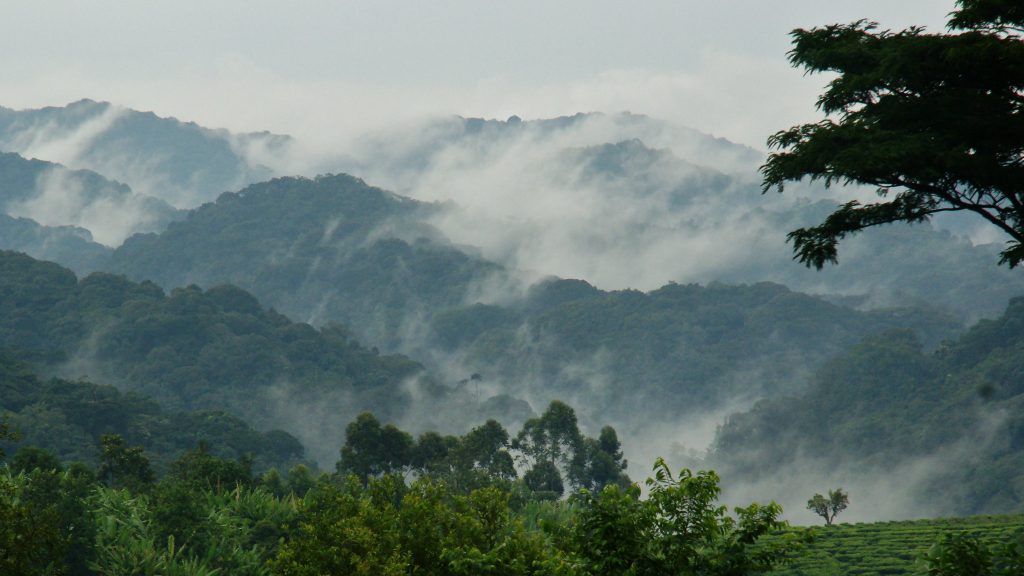
The name describes the terrain: steep ridges covered in dense undergrowth, vines and bamboo that make the forest hard to cross on foot. The park's official name is Bwindi Impenetrable National Park.
About 459 mountain gorillas live in Bwindi, almost half of the world's population, according to the Uganda Wildlife Authority. They are spread across 25 habituated groups and other wild groups.
Park entry costs USD 40 per foreign adult per day, and a gorilla permit costs USD 800, or USD 600 in April, May and November, with entry included. Transport and lodging are extra.
Buhoma is best for lodge choice and gentle forest walks, Ruhija for birding, Rushaga for the habituation visit and Nkuringo for views and a harder trek. Permit availability often decides.
Bwindi receives trekkers daily, and armed UWA rangers escort every group. Check your government's current travel advice before booking, as with any border region.
For most travellers, no: the gorillas are the reason to make the long trip, and children under 15 cannot trek. Keen birders are the exception, since Bwindi is Uganda's best site for Albertine Rift endemics.
Insight Safari Holidays runs Bwindi gorilla safaris with its own vehicles and Ugandan guides, booking the UWA permit in the sector that fits your dates and pairing it with the right lodge. Send your travel dates and the team will check permit availability first.